
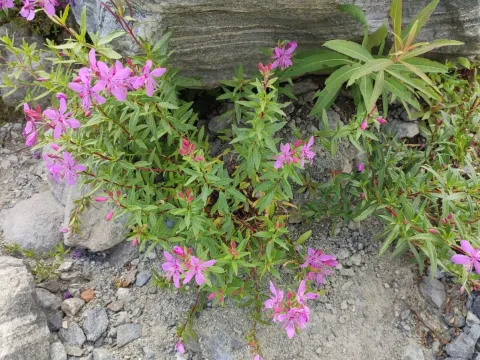
Colchian willowherb
Epilobium colchicum
Colchian willowherb is a perennial herbaceous plant belonging to the Onagraceae family. In agricultural practice, seeds are sown primarily in autumn, during October, or in early spring following a period of cold stratification, which is essential to improve germination rates.
What the section contains
Colchian willowherb
When sowing in the spring, the soil should reach a temperature of 8-10 degrees Celsius. The planting depth is minimal because the seeds are equipped with tufts and require surface placement on a moist substrate, followed by light rolling to ensure good soil-seed contact.
Sowing can be performed directly into open ground or by utilizing greenhouse-grown transplants. The seedling method allows for reduced time to reach the first marketable harvest and ensures more uniform plant density across the plantation.
For commercial production, a row-cropping method with inter-row spacing of 45 to 60 centimeters is recommended. This layout provides optimal nutritional space for each bush and facilitates efficient maintenance and weed control within the rows.
Planting density must account for the plant's biological capacity for vegetative reproduction via rhizomes, which leads to rapid spreading of the plantation during the second and third years after establishment.
Epilobium colchicum is an endemic species primarily found in the high-mountain regions of the Caucasus and Colchis. The plant has specific growing requirements, favoring moist but well-drained substrates to thrive.
The crop performs successfully in light loam and sandy loam soils with a moderately acidic to neutral pH. High organic matter content in the soil is a key factor that stimulates vigorous growth of the vegetative biomass.
Climatic requirements include high air humidity and moderate temperatures throughout the summer season. The plant does not tolerate prolonged soil or atmospheric drought, which is characteristic of southern steppe regions.
Optimal plantation development requires exposure to sunlight, although the species can tolerate light shading in its natural habitat. Under intensive cultivation, regular irrigation is mandatory during periods of low precipitation.
The winter hardiness of this species is relatively high, stemming from its mountain origins; therefore, it successfully survives low winter temperatures provided there is snow cover or proper pre-winter agricultural preparations.
The yield of green mass from Colchian willowherb depends directly on the age of the plantation, the level of agronomic management, and adequate moisture during the growing season. Peak productivity is typically reached in the second to third year.
With adherence to all agrotechnical standards, the yield of green biomass can range from 5 to 10 tonnes per hectare per single harvest. In warmer climates, a second, less abundant cutting may be possible.
Commercial use is primarily directed toward producing raw materials for fermented herbal tea. The quality of the raw material is highly dependent on harvest timing, with the active flowering phase being the optimal window when bioactive compound concentrations are at their peak.
The output ratio of dried finished product to fresh-cut mass is approximately 1:4 or 1:5, depending on the specific drying technology and moisture loss during primary processing.
To improve yields, applying nitrogen-phosphorus fertilizers in early spring is recommended to promote rapid regrowth of shoots after the dormancy period.
Common diseases for willowherb under cultivation include fungal infections, such as leaf rust caused by specific species of Puccinia fungi. Disease development is often promoted by high air humidity and overcrowding of plants.
Under excessive moisture conditions, root rot may occur, leading to plant loss in waterlogged areas. Prevention focuses on improving soil drainage and ensuring adequate ventilation within the crop canopy.
Among pests, leaf rollers and various caterpillar species that damage the leaf tissue pose the greatest risk. Intensive reproduction of phytophagous insects can significantly reduce the commercial quality of the harvested material.
To manage pests on willowherb plantations, the use of biological control methods and systemic agents approved for medicinal crops is recommended, always ensuring compliance with mandatory waiting periods before harvest.
- Preventive crop rotation.
- Timely weed management.
- Regular phytosanitary monitoring.
The harvest is conducted during the mass flowering phase, which ensures the best organoleptic properties for the final beverage. Green mass collection is carried out mechanically or by hand, depending on the production scale.
During mechanical harvesting, it is crucial to maintain a specific cutting height to avoid damaging the rhizomes and to ensure rapid shoot regrowth for subsequent vegetative cycles. An optimal cutting height is 10-15 centimeters above the soil surface.
Collected biomass must be sent for processing immediately, as the fermentation process begins as soon as leaf tissue is damaged. Delays in transport lead to a loss of quality and changes in the chemical profile of the raw material.
Primary processing includes wilting, which is necessary to reduce the moisture content of the raw material to a specific level before rolling or chopping, a step critical for high-quality fermentation.
Once harvesting is complete, it is recommended to clear the plantation of debris and, if necessary, apply fertilizers to prepare the plants for the next growing season.