
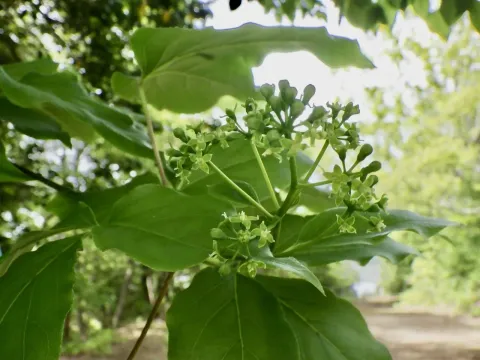
Evodiopanax innovans
Evodiopanax innovans
Evodiopanax innovans is a deciduous tree belonging to the Araliaceae family, native to the forest regions of East Asia. This species is highly valued by horticulturists for its unique foliage and elegant architectural structure in the landscape.
What the section contains
Evodiopanax innovans
Botanically, the plant is characterized by its alternate, compound leaves that often exhibit a bronze hue when young. It produces subtle clusters of greenish-yellow flowers, contributing to its refined and understated aesthetic appeal in woodland garden settings.
For optimal growth, Evodiopanax innovans requires rich, moist, and well-draining soil. It thrives in positions that provide partial shade, as the foliage can be sensitive to intense direct sunlight, especially in warmer or drier climates.
The plant is relatively hardy but benefits from a sheltered location to protect it from harsh, drying winds. Mulching the root zone is recommended to maintain soil moisture levels and to protect the roots during colder winter months.
In terms of practical use, it serves as an excellent specimen plant for shade gardens. Its ability to create a lush, tropical-looking canopy makes it a popular choice for designers aiming for a sophisticated, naturalistic look.
The species is generally robust but can suffer from root rot if planted in poorly drained soil. Maintaining appropriate soil aeration is the most effective preventive measure against such conditions.
Pests such as aphids and spider mites may occasionally infest the younger, more tender parts of the plant during the early growth season or during dry spells.
Fungal leaf spots can occur in environments with poor air circulation or excessive humidity, making proper spacing and pruning essential for a healthy tree.
Management involves regular monitoring and the removal of any diseased plant material to stop the potential spread of pathogens within the garden environment.
Integrated pest management, including the encouragement of beneficial insects, can help maintain the plant's health without relying on intensive chemical interventions.