
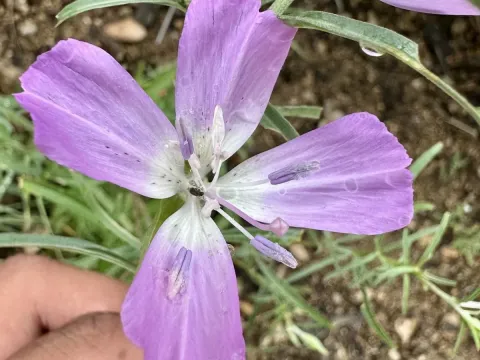
Clarkia bottae
Clarkia bottae
Clarkia bottae is a charming annual plant belonging to the Onagraceae family, known for its elegant floral structure and ornamental potential.
What the section contains
Clarkia bottae
Sowing in open fields should occur in early spring once the soil temperature is consistently above 10 degrees Celsius to ensure uniform germination.
Seeds are extremely small and should be sown on the surface of well-prepared soil, requiring only a light dusting of substrate or vermiculite.
If starting seeds indoors, use biodegradable peat pots to avoid root disturbance during transplantation, as the plant is sensitive to root damage.
Proper spacing is crucial for crop health, and thinning seedlings to a gap of 20-25 centimeters promotes better air circulation and reduces competition.
This species demands full sun exposure to maintain sturdy stems and produce an abundance of vibrant flowers throughout the growing season.
The ideal soil for Clarkia bottae is a well-drained, sandy loam with a neutral pH, ensuring that excess moisture can escape efficiently.
Watering practices must be disciplined: maintain consistent soil moisture during active growth but allow the top layer to dry between irrigation cycles.
The plant thrives in temperate climates but requires protection from excessive heat and strong winds, which can easily damage the delicate stems.
Supplemental fertilization with low-nitrogen formulas is recommended during the budding stage to encourage flower production rather than excessive foliage.
Fungal pathogens such as Fusarium wilt represent a major threat, particularly in soils that remain saturated with water for extended periods.
Powdery mildew is a common issue when atmospheric humidity is high and airflow around the plants is obstructed by excessive density.
Aphids are the primary insect pests, capable of colonizing the terminal buds and causing stunted growth and leaf curling in the affected plants.
Spider mites may appear during hot and dry spells, necessitating vigilant scouting and the application of appropriate acaricides if necessary.
Effective pest and disease control requires a combination of good sanitation, proper plant spacing, and timely intervention with biological or chemical agents.