
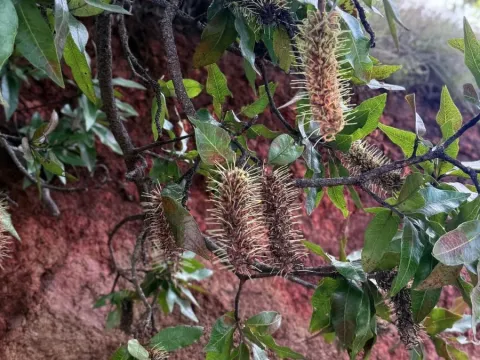
Faurea rochetiana
Faurea rochetiana
Faurea rochetiana is a slow-growing tree species, meaning that sowing in nurseries is typically synchronized with the onset of the rainy season to ensure optimal moisture for germination. Seeds often require pre-treatment to break dormancy caused by their hard seed coats.
What the section contains
Faurea rochetiana
Sowing is best carried out in nursery containers filled with a well-draining, slightly acidic potting mix. Proper aeration is critical for the initial growth stages, as root development in this species is quite sensitive to oxygen deprivation.
Transplanting into the field occurs once the saplings reach a height of approximately 30–50 centimeters. During this phase, it is vital to ensure that the root ball remains intact to facilitate successful establishment in the new soil environment.
Proper spacing is a fundamental requirement in agroforestry systems to reduce competition for nutrients and sunlight. A distance of at least 4 meters between individual trees is recommended to promote canopy development and overall tree health.
Initial maintenance after sowing and planting requires consistent irrigation, especially during the first few months. As the trees develop a deep taproot, their reliance on supplemental watering significantly decreases, making them hardy in their native habitats.
As a member of the Proteaceae family, Faurea rochetiana thrives in full sunlight. Exposure to adequate solar radiation is essential for the tree to build strong wood and maintain its characteristic form throughout its lifecycle.
The ideal soil for this species is well-drained, porous, and aerated. It does not tolerate waterlogged conditions, which lead to root rot; therefore, planting on slopes or in naturally draining terrain is highly recommended for successful cultivation.
Climatically, the species prefers tropical or subtropical high-altitude environments where temperatures remain relatively stable. It is not cold-hardy, and frost can cause severe damage to the foliage and younger branches.
Fertilization should be handled with care, as many Proteaceae species are sensitive to high levels of phosphorus. Organic mulching is a preferred method to provide slow-release nutrients while maintaining soil temperature and moisture levels.
Protection from extreme wind is beneficial during the juvenile phase to prevent structural damage. Once established, the tree develops a sturdy trunk and is capable of withstanding moderate environmental stresses typical of its native African range.
The primary utility of Faurea rochetiana lies in its high-quality timber, known for its density and durability. Harvesting is generally performed on a long-term cycle, given the slow growth rate of this specific tree species.
In addition to timber, this plant serves as a vital nectar source for apiculture. The flowers are rich in nectar, making the tree an important component in honey production systems within its natural range, significantly boosting local agricultural productivity.
Bark harvesting for medicinal use requires controlled and sustainable techniques to ensure the longevity of the tree. Ring-barking should be avoided entirely to prevent the interruption of nutrient transport, which can prove fatal to the plant.
Seed harvesting occurs when the fruits reach full maturity. Because the seeds are often wind-dispersed, monitoring the harvest window is essential to capture the seed before it is scattered throughout the surrounding habitat.
Managing Faurea rochetiana for multiple purposes requires a holistic approach. By balancing wood production with the ecological services provided by its flowers, growers can maximize the overall value of this unique and ecologically significant species.