
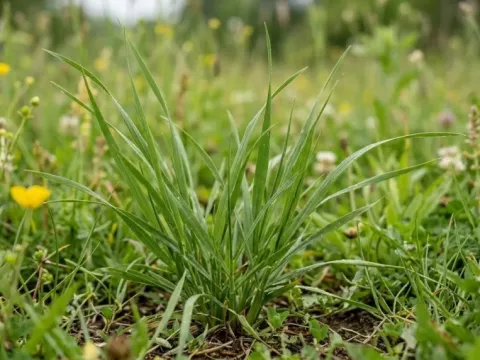
Fescue
Schedonorus
Fescue, scientifically classified under the genus Schedonorus, belongs to the Poaceae family and is recognized globally as one of the most resilient perennial forage grasses.
What the section contains
Fescue
Major species like Schedonorus pratensis (Meadow Fescue) and Schedonorus arundinaceus (Tall Fescue) are staples in agriculture, valued for their deep root systems and exceptional ability to adapt to diverse environments.
The plant grows in a bunch-type pattern, producing a dense sward that is highly resistant to environmental stress, heavy grazing, and trampling by livestock, making it ideal for pastures.
Originating from temperate regions, these grasses have been successfully naturalized across North America and parts of Asia, where they are cultivated for both hay production and grazing purposes.
Modern breeding programs focus on increasing the digestibility and leafiness of these species, ensuring they remain a preferred choice for sustainable livestock farming systems worldwide.
Fescue performs best in well-drained loamy soils but shows remarkable versatility; Tall Fescue, in particular, can thrive in soils that are too wet or too saline for many other grasses.
While the crop is cold-hardy and survives harsh winters, it also demonstrates impressive heat tolerance, maintaining growth in summer conditions that would cause other grasses to go dormant.
The optimal pH range for these grasses is between 5.5 and 7.0, although they show a good degree of tolerance to slightly acidic soil conditions prevalent in various farming regions.
Adequate soil moisture is essential for maximum yield; however, their deep-reaching roots allow the plants to withstand moderate drought better than many other cool-season species.
Fertilization management, specifically nitrogen application, is critical to maintaining the high protein content and vigorous vegetative growth required for multiple cuts throughout the season.
The yield potential of Fescue is significant, often reaching 3 to 6 tons of dry matter per hectare depending on management intensity, climate, and soil fertility levels.
These grasses provide a high-quality, nutritionally balanced feed for dairy and beef cattle, containing essential proteins and carbohydrates required for healthy growth and production.
Fescue has excellent regrowth capabilities, allowing farmers to harvest multiple cuttings in a single growing season, provided that moisture levels remain sufficient.
Integration into diverse pasture mixtures with legumes, such as white clover, significantly enhances the total nutritional value and promotes nitrogen fixation within the soil.
Consistent yield stability over several years makes Fescue a cornerstone of long-term ley farming, offering reliable performance without the need for frequent re-seeding.
Fescue crops can be susceptible to various fungal pathogens, including rusts and leaf spot diseases, which typically develop when humidity levels are high and air circulation is poor.
Common pests such as aphids, grasshoppers, and various species of lepidopteran larvae can cause localized damage, particularly during the early stages of establishment.
Proper management of plant density is essential; over-seeding or excessive fertilization can create favorable conditions for disease outbreaks and reduce the overall health of the stand.
Integrated pest management (IPM) practices, such as choosing disease-resistant varieties and maintaining optimal grazing heights, are highly effective in minimizing chemical input requirements.
- Use certified seeds to prevent the introduction of pathogens.
- Rotate crops if pest populations exceed economic thresholds.
- Ensure proper field drainage to reduce fungal disease pressure.
The timing of harvest is critical for forage quality; the ideal window for cutting is during the boot stage to early heading, which balances biomass yield with nutritional density.
Delaying harvest results in increased fiber content and lignin development, which drastically reduces the digestibility and overall energy value of the resulting hay or silage.
For high-quality hay, swift drying and proper curing techniques are necessary to prevent the loss of soluble carbohydrates and to maintain the vibrant green color that signifies high carotene content.
Silage production is an efficient way to preserve Fescue's nutritional properties; using additives can ensure successful fermentation and prevent spoilage during long-term storage.
Regular harvesting cycles are vital for maintaining the vigor of the grass stand, preventing the accumulation of dead material, and encouraging continuous growth of high-quality forage.