
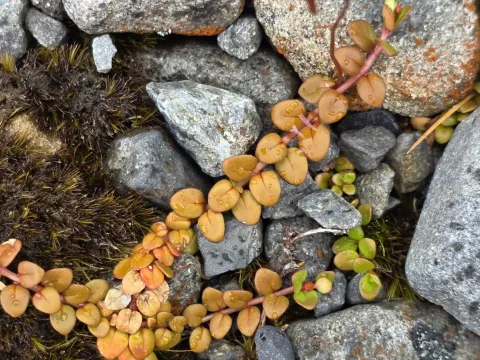
Creeping willowherb
Epilobium brunnescens
Creeping willowherb (Epilobium brunnescens) is a perennial herbaceous plant belonging to the Onagraceae family. Originating from New Zealand, this plant has gained popularity worldwide as an ornamental groundcover, valued for its ability to form dense, low-growing mats of foliage.
What the section contains
Creeping willowherb
The plant exhibits a prostrate growth habit with stems that root readily at the nodes upon contact with moist soil. This biological feature allows the species to spread rapidly, creating a carpet effect that is ideal for filling gaps in gardens, along stream banks, or in damp, cool environments.
The cultivation requirements are specific to the plant's natural adaptation to cool, damp conditions. It thrives best in moisture-retentive soils that are rich in organic matter. While it is adaptable to different soil textures, the medium must provide consistent moisture without waterlogging the root system.
Climate preferences for this crop include a temperate climate with high ambient humidity. Exposure to harsh, dry heat or intense direct sunlight can cause significant stress, resulting in the browning of foliage. Providing semi-shaded conditions is essential for maintaining plant vigor throughout the summer.
Regarding agrotechnical practices, maintenance is relatively straightforward but requires vigilance. Since it spreads via rooting stems, it can become aggressive in optimal garden conditions. Periodic pruning or the installation of edge barriers is necessary to manage its expansion and prevent it from outcompeting neighboring vegetation.
The primary threats to Epilobium brunnescens involve fungal pathogens that flourish in stagnant, humid air. Powdery mildew is the most common disease, manifesting as a white, dusty layer on the leaves, especially when the plant is kept in excessively dense, unventilated patches.
Root rot is another significant concern, typically linked to poor soil drainage. If the medium remains saturated for extended periods, the root systems may succumb to anaerobic conditions, leading to the decay of the plant's primary stems and foliage.
Pest pressure is frequently driven by gastropods, particularly slugs and snails. These creatures feed on the succulent tissue of the creeping willowherb, leaving ragged holes in the leaves and stems, which can severely diminish the plant's aesthetic value and overall health.
Integrated pest management strategies are recommended, focusing on maintaining clean surroundings and removing potential hiding spots for mollusks. Monitoring the site during early morning or late evening when these pests are most active is a crucial practice for any grower.
Finally, maintaining optimal plant density is key to disease prevention. Proper spacing and the removal of dead organic material from within the mat ensure adequate airflow, which is the best natural defense against most environmental pathogens.