
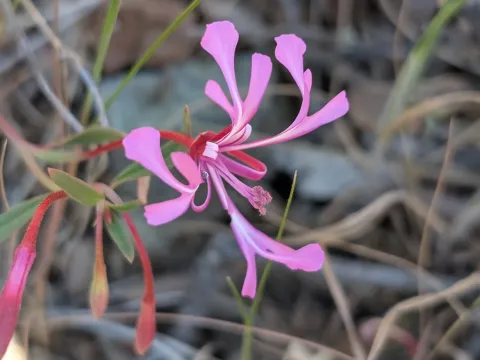
Clarkia concinna
Clarkia concinna
Clarkia concinna is a herbaceous annual plant belonging to the Onagraceae family. The most favorable time for direct sowing in the garden is mid-spring, once the soil has warmed sufficiently.
What the section contains
Clarkia concinna
For earlier blooms, gardeners often start seeds indoors under controlled conditions in late winter. Seeds should be sown on the surface of the soil with minimal coverage, as they require light to germinate.
When sowing, it is crucial to maintain proper spacing, typically 20 to 25 centimeters apart. This ensures adequate airflow and helps prevent the overcrowding that leads to fungal issues.
Germination usually takes place within two weeks under temperatures ranging from 15 to 18 degrees Celsius. Young seedlings require consistent, moderate moisture and plenty of bright indirect light.
Once seedlings develop their first true leaves, thinning is necessary to allow for optimal plant development. Care should be taken during transplantation, as the root systems are quite sensitive.
Originating from the western regions of North America, this species thrives in full sun exposure. While it tolerates partial shade, full sun is necessary to maintain compact growth and intense blooming.
The plant performs best in well-draining, loose soils with a neutral or slightly acidic pH. Poorly drained soil, especially heavy clay, will quickly lead to root rot and plant mortality.
Moderate watering is essential throughout the growing season. The soil should remain consistently moist but never waterlogged, as the plant does not tolerate standing water well.
Clarkia concinna prefers cooler temperatures and may struggle during periods of extreme summer heat. Providing adequate space and mulch can help keep the root zone cool and hydrated.
Regular fertilization with low-nitrogen, high-phosphorus formulas supports continuous flower production. Excessive nitrogen will promote lush foliage growth at the expense of floral displays.
The primary use of Clarkia concinna is in ornamental landscaping, where it is valued for its delicate, attractive flowers in borders and wildflower-style garden beds.
Flowering period extends from early summer through the first autumn frosts. Deadheading spent blossoms is highly recommended to redirect energy toward new flower development.
Seed harvesting should be performed when the capsules turn brown and begin to dry out. This ensures the seeds have fully matured before being gathered for the next planting cycle.
In cut flower production, stems are harvested when the lower buds start to open. Proper hydration immediately after cutting can significantly increase their vase life.
Once the season concludes, the entire plant should be removed and composted to ensure garden hygiene and to prevent the overwintering of pathogens.
Root rot is the most common threat, usually caused by overwatering or poor drainage. Maintaining a strict watering schedule is the best preventive measure.
Fungal diseases like powdery mildew can occur, particularly in humid or stagnant environments. Improving ventilation and air circulation is key to preventing these infections.
Aphids can cause significant damage to tender shoot tips during the growing season. Early detection and application of mild insecticidal soaps are usually effective.
Spider mites are common in hot, dry conditions. Regular misting and keeping the plant well-watered can discourage these pests from colonizing the plant foliage.
General maintenance, including weed control and debris removal, plays a significant role in minimizing the incidence of both pests and diseases in the garden.