
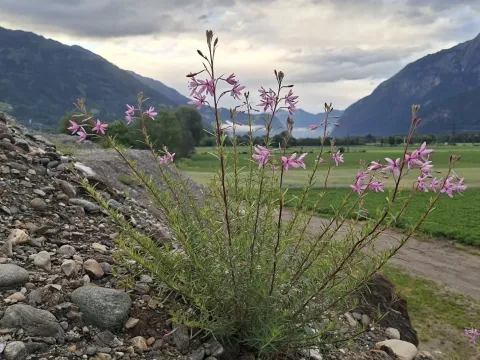
Dodonaeus willowherb
Chamerion dodonaei
Dodonaeus willowherb (Chamerion dodonaei) is a perennial herbaceous plant belonging to the Onagraceae family, known for its small, wind-dispersed seeds.
What the section contains
Dodonaeus willowherb
Seeds should be sown in late autumn or early spring; for best results, they require a cold stratification period to break dormancy and ensure uniform germination.
When sowing in a nursery, the seeds are placed on the surface of the soil and only lightly pressed in, as they need light exposure to initiate the germination process.
Maintaining high humidity and stable temperatures around 18-20°C is essential during the initial growth stages to help the seedlings establish a root system.
Once the seedlings are strong enough, they can be transplanted to a permanent site, ensuring sufficient space between plants for healthy development and airflow.
This crop thrives in sunny, open locations with well-drained, sandy or loamy soil types that mimic its natural habitat in rocky or alpine meadows.
It is a hardy plant that shows resilience to drought conditions but prefers soils with moderate moisture content to support its lush foliage and flower production.
The plant is highly adaptive to various soil pH levels, although it performs best in neutral to slightly acidic environments where nutrient availability is optimal.
Good ventilation is crucial for preventing fungal issues, especially when the plant is grown in areas with high humidity or frequent rainfall.
Dodonaeus willowherb is exceptionally cold-tolerant, meaning it can withstand harsh winter climates without specific protection or mulching measures.
The plant can be susceptible to common pests such as aphids and specific moth larvae that feed on the soft, green leaves during the active growth phase.
Rust diseases are the primary threat in environments with poor drainage, which can weaken the plant and reduce the overall harvest quality significantly.
Powdery mildew is another risk factor, especially during warm and humid weather; timely removal of infected plant parts can help control the spread of the fungus.
Regular monitoring of the plantation is recommended to identify early signs of infestation and apply organic control methods before the damage becomes severe.
Maintaining proper spacing between rows and ensuring adequate sunlight penetration helps minimize the environment suitable for pathogen development.
The harvest phase takes place during full flowering, when the concentration of essential compounds is highest, ensuring maximum quality of the raw material.
Stems are cut systematically, leaving the basal part of the plant intact to facilitate regrowth and sustainable production in subsequent years.
Immediate handling after harvest is vital; the cut biomass must be transported to a drying facility to prevent unwanted fermentation or exposure to contaminants.
Drying is performed in a controlled, well-ventilated environment away from direct light, which helps maintain the natural color and aromatic profile of the herbs.
Properly dried product should be stored in a cool, dry place to prevent moisture absorption, which could otherwise lead to spoilage during long-term storage.