
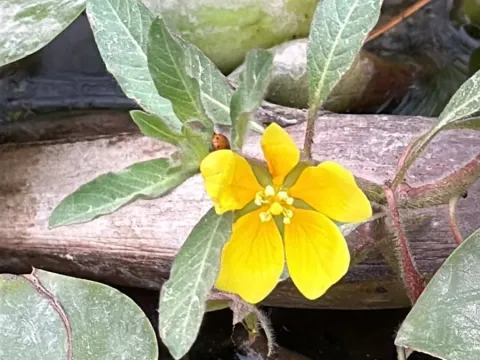
Ludwigia peploides
Ludwigia peploides
Ludwigia peploides, commonly known as floating water primrose, is a perennial aquatic plant within the Onagraceae family. It is a highly adaptable species capable of growing both as a submerged hydrophyte and as a creeping plant along wet, muddy shorelines.
What the section contains
Ludwigia peploides
Originating from the Americas, the plant has established itself as an invasive species in various parts of the world, including Europe and Australia. Its ability to spread via small vegetative fragments makes it a difficult species to eradicate once it invades a new water body.
The plant thrives in warm climates and nutrient-rich aquatic environments. It requires significant sunlight and calm water conditions, such as irrigation canals, ponds, and slow-moving rivers. High concentrations of nitrogen in the water often trigger explosive growth of this vegetation.
Botanically, it is characterized by its bright yellow flowers and its dual-root system. Beyond standard submerged roots, it develops specialized spongy, air-filled structures (pneumatophores) that allow the plant to survive in low-oxygen environments and maintain buoyancy on the water surface.
While Ludwigia peploides is not a traditional agricultural crop, its management is a frequent concern for water resource agencies. It is considered a nuisance species because it clogs waterways, interferes with drainage systems, and disrupts the ecological balance of native aquatic habitats.
The primary threat posed by Ludwigia peploides is its ability to outcompete native flora through rapid vegetative expansion. It creates thick mats that block sunlight from entering the water, which severely impacts the oxygen levels and underwater ecosystem health.
There are no major commercial pests or diseases that inhibit its growth, as the plant acts as a dominant weed in its non-native range. Control measures typically involve mechanical removal or integrated management strategies to prevent fragmentation, as broken stems can easily root elsewhere.