
Ludwigia senegalensis
Ludwigia senegalensis
Description
Growing requirements
Ludwigia senegalensis is an aquatic plant belonging to the Onagraceae family. Originating from the tropical wetlands of Africa, it has evolved to thrive in riverbanks and marshy areas where high humidity and specific soil compositions are present, making it a prized specimen for experienced aquarists.
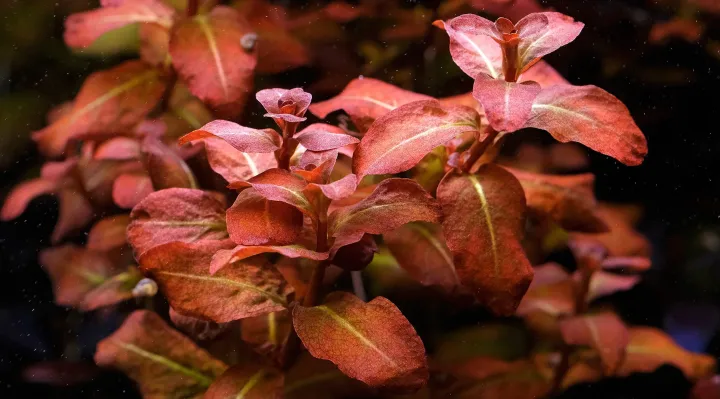
The botanical feature that distinguishes this plant is its striking foliage, which exhibits a geometric pattern of leaf veins. The leaves, when provided with optimal light, transition into vibrant shades of red and bronze, providing a high-contrast aesthetic in cultivated aquatic environments.
Cultivation requires stable water parameters, with a pH range between 6.0 and 7.0 being ideal. The plant is quite sensitive to organic waste accumulation, requiring pristine water conditions and robust filtration systems to prevent the development of necrotic spots on the lower stems.
Intensive lighting is a non-negotiable requirement for this species. To maintain its characteristic color and compact growth, it is recommended to provide high-intensity full-spectrum light for 8 to 10 hours daily, coupled with consistent CO2 injection to fuel rapid metabolism.
A nutrient-rich substrate is essential for proper root development. Fine-grained, iron-enriched soil allows the plant to anchor securely and absorb necessary minerals directly through its root system, which significantly improves its overall vitality and resistance to environmental stress.
Main diseases and pests
The primary threat to the health of Ludwigia senegalensis is the competition from various types of algae, such as hair algae or black beard algae. These organisms compete for light and nutrients, quickly overwhelming the plant if the nutrient balance in the water column is not strictly monitored.
Nutrient deficiencies, particularly iron and potassium, are common causes of leaf yellowing and stem thinning. Without a supplemental liquid fertilization routine, the plant will rapidly lose its vibrant coloration and become susceptible to secondary fungal infections.
Mechanical damage to the stems can occur during maintenance or if the flow rate in the tank is excessively high. Maintaining a gentle but constant water flow is crucial, as too much turbulence can damage the delicate apical meristems and hinder vertical growth.
Poor water quality resulting from overcrowded conditions or decaying organic matter creates an environment conducive to bacterial infections. These infections manifest as localized decay on the stems, often requiring the immediate pruning and removal of affected parts to save the plant.
Significant shifts in temperature or water chemistry act as stressors that can lead to leaf drop. Ensuring that all environmental changes, such as fertilizer dosing or water changes, are gradual will help the plant maintain its structural integrity and ornamental value.