
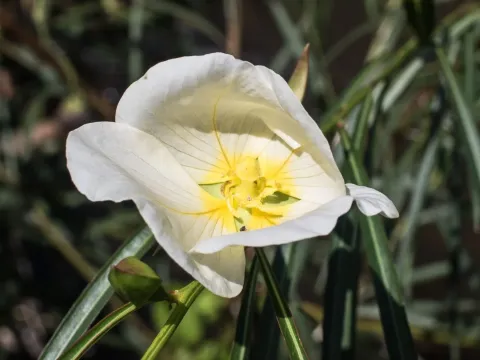
Ludwigia major
Ludwigia major
Ludwigia major is a significant member of the Onagraceae family, primarily known for its adaptability in aquatic and semi-aquatic environments. Its origins trace back to tropical regions where it thrives in wetlands and along riverbanks.
What the section contains
Ludwigia major
Botanically, the plant features alternate or opposite leaves and a robust stem structure. It exhibits heterophylly, meaning its leaf shape and size change depending on whether it is grown fully submerged or emerged in high-humidity conditions.
Optimal growth requires a temperature range between 22 and 27 degrees Celsius. The substrate must be nutrient-rich, preferably a mix of fine silt and organic compost, providing a stable anchor for the root system during the development phase.
Lighting is the most critical factor for this culture; high-intensity light promotes compact growth and vibrant red or copper leaf pigmentation, which significantly increases the aesthetic and commercial value of the crop.
Water quality parameters, including moderate hardness and slightly acidic pH levels, should be monitored to ensure the efficient uptake of trace elements, especially iron and manganese.
Bacterial soft rot represents a major threat, particularly when water flow is stagnant and temperature fluctuations occur within the growing facility.
Algal blooms are highly problematic, as they compete directly with Ludwigia major for light and essential minerals, often suffocating the plant foliage.
In greenhouse settings, pests like aphids and spider mites can infest the emerged growth, causing deformation of the terminal buds and foliage.
Inadequate mineral balance, specifically a deficiency in potassium, often makes the plant susceptible to secondary infections and brittle stem structure.
Integrated pest management, including precise fertilization and mechanical removal of algae, is essential to maintain the health and vigor of the Ludwigia crop.