
Ludwigia palustris
Ludwigia palustris
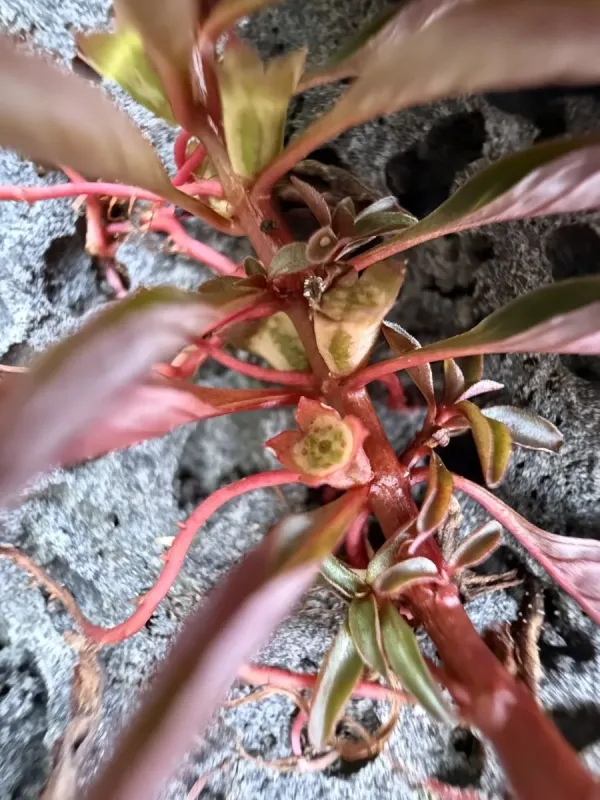
Description
Sowing dates
Ludwigia palustris is not a traditional field crop; therefore, its propagation in artificial environments is most often carried out vegetatively.
The optimal period for taking cuttings and planting the vegetation in the substrate is spring or early summer, when daylight hours are at their peak.
When cultivating in a controlled environment, it is necessary to consider that the plant adapts quickly to new conditions if planting is done in fresh, nutrient-rich substrate.
Seed propagation on a commercial scale is rarely practiced due to the difficulty of collection and the low germination rate compared to vegetative cuttings.
To accelerate the rooting of the planted stem fragments, specialists recommend maintaining a stable water temperature and moderate water flow.
Growing requirements
This culture belongs to the Onagraceae family and is a typical hydrophyte, capable of existing in both submerged and emergent forms.
The plant has increased requirements for water quality and lighting, preferring soft or moderately hard water with a neutral or slightly acidic pH.
The optimal temperature range for the active growth of Ludwigia palustris is between 20 and 26 degrees Celsius, which ensures proper metabolic processes.
The soil or substrate must be rich in micronutrients, especially iron, which is necessary to maintain the vibrant leaf coloration of the plant.
An important factor for success is light intensity: in insufficient light, stems become excessively stretched, and the leaf blade loses its decorative appeal.
Yield
The productivity of Ludwigia palustris is evaluated not by crop mass, but by the rate of green biomass increase and the volume of planting material obtained.
In favorable conditions, the plant is capable of forming dense thickets, which require regular thinning to prevent the suppression of neighboring species.
With optimal CO2 supply and the application of liquid fertilizers, the growth rate increases significantly, allowing for the collection of cuttings every three to four weeks.
The efficiency of cultivation directly depends on the technical equipment of the farm or nursery specializing in the breeding of aquatic plants.
Harvesting consists of carefully cutting apical shoots, which are subsequently used for sale or for establishing new production areas.
Main diseases and pests
The main problems when growing Ludwigia are related to the appearance of unwanted algae, such as hair algae, which compete for nutrients.
Insufficient lighting or a macro-element imbalance often leads to chlorosis, where leaves turn yellow and die, slowing the overall growth of the culture.
In closed systems, certain types of snails pose a danger, as they can damage the tender stems of the plant by eating holes in them.
Fungal infections occur during sudden changes in water parameters or poor aeration, which requires the immediate removal of damaged plant parts.
- Disruption of lighting cycles.
- Micronutrient deficiency (iron).
- Competition with algae.
- Damage by pests (snails).
- Stagnant water conditions.
Harvesting
The harvest of finished products is carried out by pinching or cutting stems with a sharp tool directly above the node where the leaves are located.
After collection, the cuttings undergo disinfection and sorting, after which they are placed in special containers for transportation to the consumer.
Harvesting technology requires careful handling, as the fragile stems of Ludwigia are easily broken under mechanical stress.
It is important to ensure high humidity when storing collected material until it is sold to prevent the plant tissues from drying out.
In commercial nurseries, the harvesting process is often automated, but manual labor remains essential for selecting the highest quality specimens.