
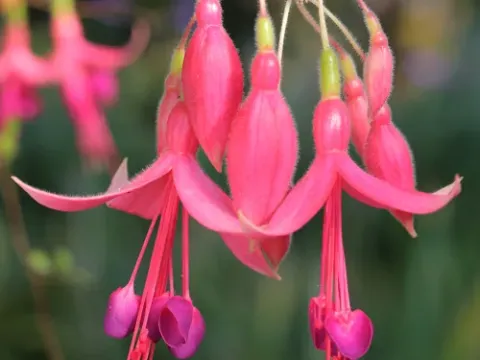
Fuchsia hatschbachii
Fuchsia hatschbachii
Fuchsia hatschbachii is a perennial evergreen shrub belonging to the Onagraceae family. Originating from the diverse ecosystems of Brazil, this species thrives in environments that mimic its native moist and cool forest habitats.
What the section contains
Fuchsia hatschbachii
Botanically, it is distinguished by its upright growth habit and narrow, elongated leaves, contrasting with the more common drooping or trailing fuchsia varieties. Its flowers are refined and tubular, adapted for pollination in natural forest conditions.
Climatic requirements focus on maintaining a moderate temperature range, ideally between 15°C and 22°C. The plant performs best in sheltered locations that provide filtered light, avoiding the intense heat of midday sun exposure.
The soil must be well-draining, nutrient-rich, and slightly acidic to neutral in pH. Proper aeration of the root zone is critical, as the species is highly susceptible to root decay if subjected to waterlogged soil conditions.
Horticultural use is primarily focused on ornamental displays. Due to its unique aesthetic, it is a prized specimen for temperate-climate greenhouse collections and as a container plant for patios in areas with mild summer climates.
The most frequent pests affecting this species are whiteflies and spider mites, which can proliferate rapidly in stagnant air. Regular inspection of the foliage, particularly the undersides of the leaves, is necessary for early detection.
Fungal diseases, such as Botrytis (gray mold) and various root rots, represent significant threats under conditions of excessive humidity. Ensuring proper airflow and preventing leaf wetness during evening hours can greatly reduce the risk of infection.
Fusarium wilt can also affect the plant if the growing medium is contaminated. Using high-quality, sterile potting mixes is a fundamental preventative measure for hobbyists and greenhouse managers alike.
Management of pest outbreaks often involves the application of appropriate biological controls or targeted insecticides. Integrated pest management strategies, such as physical removal of affected leaves, are highly recommended.
Maintaining plant vigor through balanced nutrition and proper watering schedules is the best defense against disease. Stressed plants are significantly more prone to opportunistic infections than those grown in optimal conditions.