
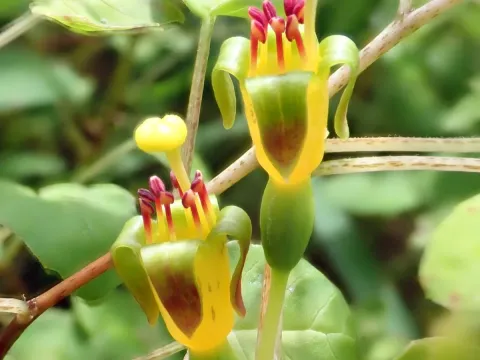
Fuchsia procumbens
Fuchsia procumbens
Fuchsia procumbens, commonly known as the trailing fuchsia, is a member of the Onagraceae family. It is primarily propagated through vegetative cuttings, which ensures the consistency of the plant's unique trailing growth habit.
What the section contains
Fuchsia procumbens
Seed propagation is possible but requires a stratified approach. Seeds should be sown in a well-draining seed-starting mix in early spring, keeping the temperature consistent at around 20 degrees Celsius.
Cuttings are best taken from non-flowering shoots during the active growing season. Placing cuttings in a humid environment promotes faster root development within two to three weeks.
Once roots are established, young plants should be transferred into individual pots. Using a high-quality potting mix enriched with organic matter provides the necessary foundation for rapid development.
Strategic pinching of the stem tips during the early growth stages encourages branching, resulting in a denser and more aesthetically pleasing plant architecture.
Native to New Zealand, this species thrives in cool, semi-shaded environments. In professional cultivation, it is essential to provide bright, indirect light to prevent the scorching of its delicate leaves.
The soil must be fertile, moist, and well-draining. A mix of peat moss, perlite, and high-quality garden soil creates the ideal medium that supports both root respiration and moisture retention.
Watering requirements are strict; the substrate must remain consistently moist but never waterlogged. Overwatering often leads to root rot, which is a common failure point for this crop.
The optimal temperature range is between 15 and 22 degrees Celsius. During the dormant winter season, the plant benefits from cooler temperatures, which mimics its natural seasonal progression.
Fertilization with a balanced liquid fertilizer during the active growth phase is recommended. Frequent, diluted feeding is superior to occasional, heavy applications for maintaining overall vigor.
Whiteflies and spider mites represent the primary insect threats to Fuchsia procumbens. These pests tend to colonize the underside of leaves, especially in warm and dry environments.
To mitigate the risk of pest outbreaks, growers should implement a strict sanitation routine. Regularly cleaning the foliage with water sprays can help deter mite population growth.
Botrytis (grey mold) is a significant fungal threat, typically triggered by high humidity levels combined with poor air circulation. Proper spacing between plants is critical for managing this disease.
Root rot caused by various soil-borne pathogens can be devastating. Preventing this requires diligent monitoring of soil moisture levels and avoiding excessively dense growing media.
Integrated Pest Management (IPM) practices, including the use of biological controls or targeted insecticides, should be used when monitoring indicates a rise in pest threshold levels.