
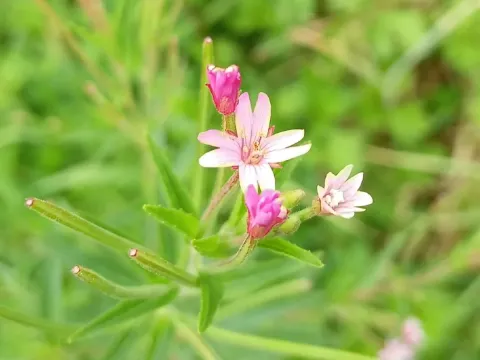
Fringed willowherb
Epilobium ciliatum
Fringed willowherb (Epilobium ciliatum) is a perennial herbaceous plant belonging to the Onagraceae family. In agricultural contexts, it is primarily managed as an invasive weed rather than a cultivated crop.
What the section contains
Fringed willowherb
Native to North America, this species has successfully colonized diverse regions across the globe. It is commonly found in disturbed soils, agricultural fields, wetlands, and along transportation corridors where soil is moist.
The plant demonstrates high adaptability to various climate zones, thriving in temperate environments with adequate soil moisture. It is particularly successful in colonizing fields that have been recently tilled or irrigated.
Botanically, Epilobium ciliatum is identified by its stems which are covered in fine, glandular hairs. The leaves are opposite, lanceolate, and finely toothed, which differentiates it from other related species.
Agricultural management requires early detection and eradication. Since the seeds are equipped with tufts of hair (pappus), they are easily dispersed by wind, making boundary management crucial for preventing field infestations.
As a competitive weed, Fringed willowherb reduces crop yields by competing for space, light, and soil nutrients. In dense patches, it can significantly hinder the growth of young crops during the early stages of development.
The species can harbor various plant pathogens, acting as an alternative host for fungi that may negatively impact vegetables and other high-value crops grown in the vicinity of infested zones.
Pests such as aphids are frequently observed on this species. These insects can migrate from the weed to nearby crops, posing an additional risk to the overall health of the agricultural ecosystem.
Chemical control programs often involve the application of systemic herbicides. However, efficacy may vary based on the growth stage, with juvenile plants being the most susceptible to treatment.
Mechanical cultivation remains an effective strategy if implemented frequently. Regular harrowing or tilling prevents the plant from establishing a deep root system, which is essential for its long-term survival in cultivated fields.