
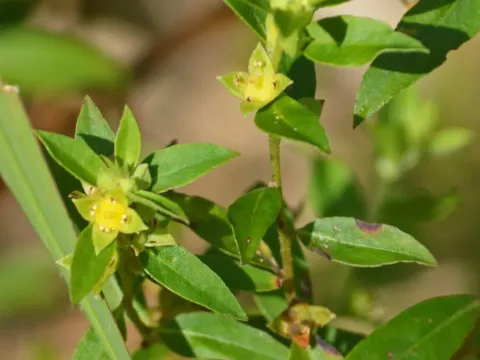
Globe-fruit Ludwigia
Ludwigia sphaerocarpa
Globe-fruit Ludwigia (Ludwigia sphaerocarpa) is a perennial herbaceous plant belonging to the Onagraceae family. It is native to North America, where it typically inhabits wetlands, marshes, and the margins of water bodies.
What the section contains
Globe-fruit Ludwigia
The plant features distinct botanical characteristics, including lanceolate leaves arranged alternately along the stems. Its common name is derived from its unique, spherical seed capsules that form after the flowering stage.
Cultivation requires conditions that mimic a high-humidity environment. Ideal growth is achieved in consistently moist, nutrient-rich soils or directly in shallow water where the plant can maintain its hydrophilic status.
Light levels are a critical factor for the health of Ludwigia sphaerocarpa. It thrives under bright, natural light, which promotes healthy stem development and prevents the foliage from becoming sparse or losing its structural integrity.
In terms of agricultural and horticultural use, this species is primarily valued for its role in ornamental pond design and naturalistic landscaping. It serves as an excellent candidate for stabilizing the edges of freshwater features.
The primary threats to this species include habitat degradation, particularly the drainage of wetlands and pollution of water sources. These activities severely impact the local populations in their native range.
Disease outbreaks in cultivation often arise from stagnant water conditions combined with poor circulation, which can lead to root rot. Nutrient imbalances, particularly a lack of available iron, can lead to chlorosis and stunted growth.
Pests such as aquatic snails and various species of caterpillars can pose a significant danger by consuming the plant’s soft tissue. In greenhouse settings, aphids may also become an issue during periods of low humidity.
Integrated pest management should focus on maintaining a healthy aquatic ecosystem, which naturally suppresses the proliferation of harmful organisms. Regular monitoring of the foliage helps in early detection of potential infestations.
Effective control involves isolating infected plants and ensuring that the water quality remains consistent with the species' specific requirements to avoid further stress and susceptibility to pathogens.