
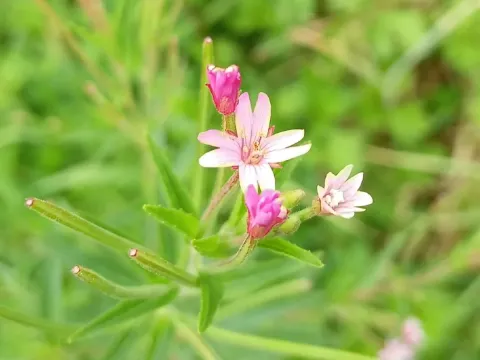
Fireweed
Epilobium L.
Commercial sowing of Fireweed (Epilobium angustifolium) seeds is typically carried out in autumn as a winter planting. This allows seeds to undergo natural stratification in the soil, which significantly increases germination rates in the following spring.
What the section contains

Fireweed
An alternative method is spring sowing, which requires prior cold stratification of the seeds in a refrigerator or under snow for 1–2 months. It is crucial to ensure surface sowing, as the tiny seeds require significant light exposure to germinate effectively.
Seeds should be covered with a very thin layer of soil, no more than 0.5 cm, or simply pressed into compacted ground followed by a light dusting of sand. Soil moisture must be maintained consistently until the first seedlings emerge.
Vegetative propagation using rootstock cuttings is considered the most efficient way to establish plantations. These are planted at a depth of 10–15 cm, allowing the plant to root faster and form a dense clump within the first year of vegetation.
Planting density varies based on production goals: for mechanized harvesting, a spacing of 60 to 90 cm between rows is optimal to ensure easy access for machinery during maintenance and harvesting processes.
Fireweed belongs to the Onagraceae family and is known for its high ecological plasticity. The crop prefers well-lit areas, although it can tolerate partial shading, which is characteristic of its natural growth on forest clearings and burn sites.
The plant is not overly demanding of soil types, but it shows the best yield on well-drained sandy loam or light loamy soils. The crop reacts negatively to waterlogging, so areas with a high water table are unsuitable for plantation establishment.
Fireweed possesses high frost resistance, allowing it to be grown successfully in northern regions. The optimal temperature range for active vegetative growth is between +18 and +25 degrees Celsius.
Sufficient soil moisture during the phase of intensive stem growth is a key requirement. In dry periods, the crop requires moderate irrigation; otherwise, stems become coarse and the accumulation of bioactive compounds in the leaves is reduced.
The crop responds well to organic fertilization with compost or humus during soil preparation. Nitrogen-based mineral fertilizers applied during early stages stimulate the development of leaf mass, which is vital for high-quality harvesting.
Fireweed yield depends directly on the age of the plantation and local agronomic conditions. Peak productivity is usually observed in the 3rd or 4th year after planting when the root system has fully established and formed a dense turf.
With proper cultivation practices, one hectare can produce between 2 and 4 tons of dry herbal raw material. Leaf mass accounts for the bulk of the harvest, provided it is high-quality and free from pest damage.
To improve yields, it is recommended to rejuvenate plantations every 5–7 years, as plants become thinner with age, leading to a decline in productivity. After this cycle, the soil requires restoration of fertility.
The timing of the harvest is a significant factor in total yield. Early harvesting before flowering produces leaves with a high vitamin content, while later harvesting may be more suitable for producing fiber-based products.
It is important to note that under intensive commercial cultivation, two harvests per season are possible if intervals between cuttings are maintained to allow the plant to regenerate its vegetative mass.
Fireweed is susceptible to several diseases, with rust (caused by fungal pathogens) being the most dangerous. It manifests as brown spots and leads to premature drying of the leaf blade, which reduces the quality of the commercial raw material.
Powdery mildew also frequently affects plantations under high humidity and stagnant air conditions. A white coating appears on the leaves, inhibiting photosynthesis and necessitating the use of biological fungicides.
Among pests, various species of hawk moth caterpillars cause the most damage, capable of destroying significant green mass in a short time. Regular monitoring of plantations is essential for early detection of larvae.
Aphids and bugs may damage shoot tips, causing stem distortion and slowing plant growth. Biological control methods are preferred, as Fireweed is often harvested for human consumption as a medicinal plant.
Disease prevention involves maintaining proper aeration, removing crop residues after harvesting, and ensuring that planting material is free from viral infections that can be transmitted through soil and insects.
Fireweed is harvested manually or mechanically during the mass flowering phase, when the concentration of beneficial substances in the leaves reaches its peak. The best time for collection is the early morning, after dew has evaporated.
For manual harvesting, leaves are carefully stripped from the stem with a downward motion. It is important to leave the top part of the plant with the flowers to ensure continued photosynthesis and potential seed maturation.
After harvesting, the material must be delivered to the processing site within 2–4 hours to prevent self-heating and premature oxidation, which can compromise the flavor profile of the final tea product.
Mechanical harvesting involves the use of specialized leaf-picking machinery that trims the upper parts of the stems. This method requires post-harvest sorting to remove impurities and coarse stem fragments.
Once harvested, the material undergoes a wilting phase in the shade with good ventilation, which is essential to prepare the leaves for fermentation. Proper wilting determines the final aroma and quality of the fermented tea product.