
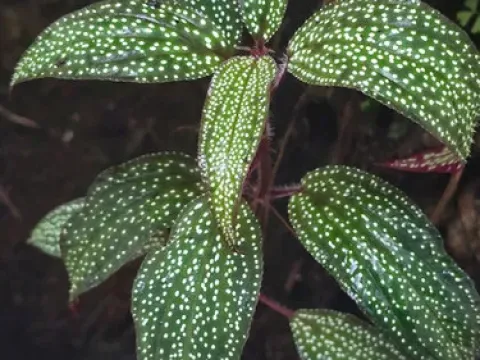
Sonerila maculata
Sonerila maculata
Sonerila maculata is a herbaceous perennial belonging to the Melastomataceae family, native to the humid tropical forests of Southeast Asia. This species is highly regarded in the ornamental plant trade for its unique foliage, which typically features distinct silvery or white spots against a dark green base.
What the section contains
Sonerila maculata
Botanically, the plant is characterized by a low-growing habit and leaves that often exhibit a velvety texture. These adaptations are typical for understory plants that thrive in the deep shade and high humidity of tropical rainforest floors, making them specialized in their environmental needs.
Successful cultivation requires a stable environment with temperatures between 20°C and 25°C. The plant is notoriously sensitive to fluctuations in moisture and temperature, making it a challenging species for beginner gardeners, often requiring placement in terrariums or controlled glasshouse environments.
The substrate must be well-draining yet highly moisture-retentive, consisting of a mix of peat moss, leaf mold, and perlite. Proper drainage is critical, as the roots are prone to rapid decay if exposed to stagnant water, necessitating careful watering practices throughout the growing season.
In terms of economic use, Sonerila maculata is primarily utilized as a high-value collector's houseplant and a specialty crop for interior landscaping. It is frequently marketed as a choice plant for display in vivariums or high-humidity greenhouse settings.
The primary threats to Sonerila maculata are fungal pathogens, specifically root rot and stem rot, which are triggered by poor substrate aeration and overwatering. Maintaining a sterile growing environment is essential to prevent these common horticultural issues.
Insect pests, most notably spider mites, can severely compromise the plant's health in environments with low humidity. Integrated pest management strategies, such as physical removal or the application of selective miticides, are recommended when infestations are detected early.