
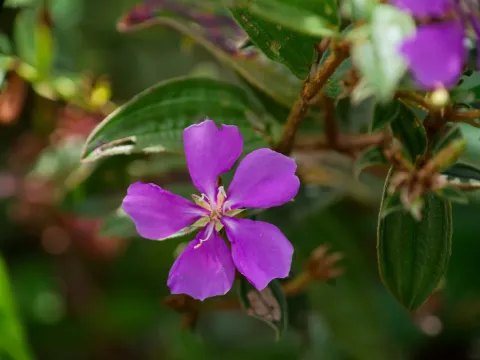
Tibouchina
Tibouchina Aubl.
Tibouchina is a genus of plants within the family Melastomataceae. These evergreen shrubs or small trees are native to tropical regions of the Americas, particularly Brazil, where they are known for their spectacular purple blooms and textured foliage.
What the section contains
 Tibouchina granulosa
 (Desr.) Cogn.
Tibouchina granulosa
Tibouchina granulosa (Desr.) Cogn.
 Tibouchina lepidota
 (Bonpl.) Baill.
Tibouchina lepidota
Tibouchina lepidota (Bonpl.) Baill.
 Tibouchina lepidota and mutabilis hybrids
Hybrids between Tibouchina lepidota and Tibouchina mutabilis
Tibouchina lepidota and mutabilis hybrids
Hybrids between Tibouchina lepidota and Tibouchina mutabilis
 Tibouchina mutabilis
 (Vell.) Cogn.
Tibouchina mutabilis
Tibouchina mutabilis (Vell.) Cogn.
 Tibouchina paratropica
 Aubl
Tibouchina paratropica
Tibouchina paratropica Aubl
 Tibouchina urvilleana
 (DC.) Cogn.
Tibouchina urvilleana
Tibouchina urvilleana (DC.) Cogn.
Tibouchina
The plant requires a warm climate with high humidity to thrive. As a frost-sensitive tropical species, it is typically cultivated in greenhouses or as a container plant in temperate regions, requiring protection when temperatures drop below 10 degrees Celsius.
Soil quality is paramount for the health of Tibouchina. It thrives in well-draining, acidic, or slightly acidic soils rich in organic matter. A soil mix containing peat or coco coir with perlite is ideal for maintaining the necessary moisture and aeration levels.
Sunlight exposure should be bright but indirect, especially during the hottest parts of the day. In regions with intense solar radiation, partial shade is recommended to prevent scorching of the velvety leaf surface while still supporting flower bud formation.
Regular maintenance practices include pruning to manage size and promote branching. Frequent fertilization during the active growing season with acidic-friendly fertilizers is necessary to sustain the intense coloration and vigorous growth of the plant.
Tibouchina is susceptible to common greenhouse pests such as spider mites, whiteflies, and scale insects. Maintaining proper air humidity levels and performing regular inspections of the underside of leaves helps in early detection of infestations.
Fungal issues, particularly root rot, frequently occur due to poor drainage or excessive soil moisture. Ensuring that the root zone is never waterlogged is the primary defense against these debilitating pathogens.
Nutrient deficiencies, such as iron chlorosis, are common if the soil pH becomes too high or if the water used for irrigation is overly alkaline. Correcting the pH with soil amendments is essential for plant vitality.
Fungal leaf spot diseases can develop if air circulation is insufficient. Keeping the foliage dry during irrigation and providing adequate space between plants helps minimize the risk of spread among a collection of specimens.
Management of these threats involves a combination of cultural practices and chemical control when necessary. Systemic insecticides and fungicides should be applied according to professional labels to ensure effective and safe control of pests and diseases.