
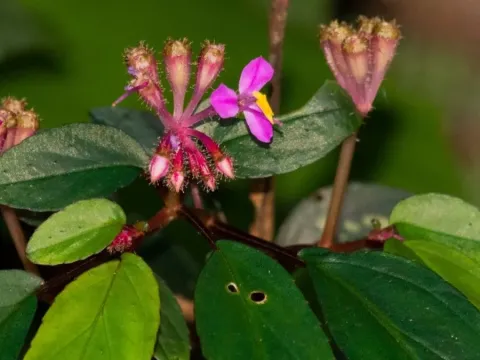
Sonerila
Sonerila
Sonerila is a genus of herbaceous plants belonging to the Melastomataceae family. Native to tropical regions of Southeast Asia, these plants are predominantly found in the shaded, high-humidity environments of forest floors and near stream banks, where they thrive in stable tropical climates.
What the section contains

Sonerila
Botanically, Sonerila species are prized for their ornamental foliage, which often features striking patterns, metallic textures, or vibrant spots. The stems are typically succulent, and the plant produces attractive clusters of flowers, making it a popular choice for botanical collections and vivarium setups.
Cultivation requirements for Sonerila demand meticulous attention to humidity levels. Because they are native to moist forests, they require consistent ambient moisture to remain healthy, making them excellent specimens for closed containers or humid greenhouse conditions.
Regarding soil and media, they perform best in well-draining, nutrient-rich substrates. A mix consisting of peat moss, sphagnum, and perlite provides the necessary structure and moisture retention without risking root suffocation, which is a common cause of failure in container gardening.
The plants are sensitive to light and should be kept in bright, indirect light. Direct sunlight is highly detrimental and can bleach the leaves or cause irreparable scorch marks. Regular monitoring of the substrate moisture is essential to prevent both wilting from dryness and fungal issues from waterlogging.
Common threats to Sonerila include infestations of spider mites and mealybugs, which are exacerbated by dry indoor air. Furthermore, the plants are susceptible to fungal diseases such as leaf spots or root rot, which are often consequences of poor air circulation and inadequate drainage management.