
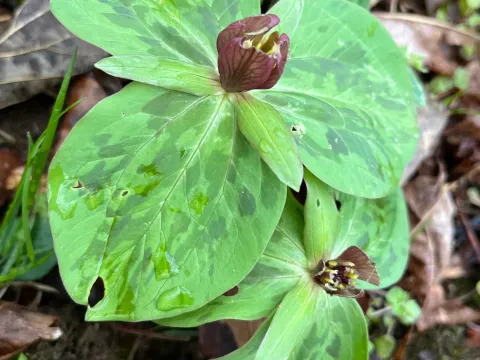
Sessile trillium
Trillium sessile
Sessile trillium (Trillium sessile) is a rhizomatous perennial plant belonging to the Melanthiaceae family. Native to the woodlands of North America, this species thrives in forest environments characterized by rich, moist, and well-drained soils.
What the section contains
Sessile trillium
Successful cultivation requires soil that is rich in organic matter and maintains a neutral to slightly acidic pH level. It is essential to ensure that the site has effective drainage, as the fleshy rhizomes are prone to decay if kept in waterlogged conditions.
This plant is primarily suited for shade gardening, as it requires protection from the harsh afternoon sun. A woodland-style setting with canopy cover provides the necessary protection from temperature extremes and keeps the soil moisture consistent.
Agrotechnical maintenance involves applying mulch annually, which mimics the natural leaf litter layer. This practice preserves essential soil moisture and suppresses weed growth while providing a slow release of nutrients to the root system during the growing cycle.
Botanically, the plant is distinguished by its mottled leaves and sessile flowers that lack pedicels, sitting directly upon the whorl of three bracts. It typically reaches maturity in early spring, completing its vegetative growth before the summer dormancy period begins.
Gastropods, particularly slugs and snails, are the primary pests of this crop, frequently feeding on the tender foliage. Gardeners often manage these populations by using physical barriers or targeted control measures during wet periods when pest activity is highest.
Fungal diseases, such as rhizome rot, are common threats if the soil remains excessively wet or if plant density is too high. Proper spacing and ensuring optimal air circulation are critical strategies to maintain the health and vigor of the plantings over several years.