
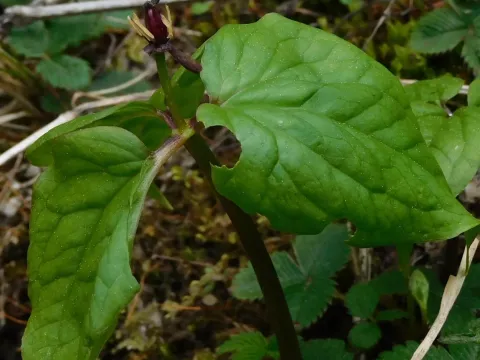
Trillium govanianum
Trillium govanianum
Trillium govanianum is a perennial herbaceous plant belonging to the Melanthiaceae family. This species is endemic to the Himalayas, where it naturally inhabits high-altitude forests and alpine meadows at elevations ranging from 2,500 to 4,000 meters above sea level.
What the section contains
Trillium govanianum
In its natural habitat, the plant prefers sites with humus-rich, moist, and well-drained soil. It is sensitive to rhizome waterlogging and requires protection from direct midday sunlight, favoring the dappled light or partial shade typical of woodland understories.
Agricultural requirements include maintaining stable soil moisture during the growing season and a cool climatic regime. The plant does not tolerate sharp temperature fluctuations and requires mulching to simulate natural forest litter, which protects roots from overheating and desiccation.
Propagation is primarily achieved through seeds, although the germination process is lengthy and requires stratification. Vegetative propagation is possible by dividing the rhizome, but this method is limited due to the slow growth rate of the plant itself.
In terms of economic use, the species is valued as a medicinal raw material. The rhizomes contain steroidal saponins, which are actively used in traditional medicine by mountain communities to treat various inflammatory conditions, making it a subject of interest for the pharmaceutical industry.
The primary threats to Trillium govanianum populations include intensive harvesting in the wild, which leads to the degradation of natural habitats. Due to its slow reproduction rate, the plant is extremely vulnerable to human impact and over-collection.
Under cultivation conditions, common pests include soil nematodes and slugs, which can damage the root system and young shoots. Excessive rainfall without adequate drainage often triggers the development of root rots caused by fungal pathogens such as Pythium or Rhizoctonia.