
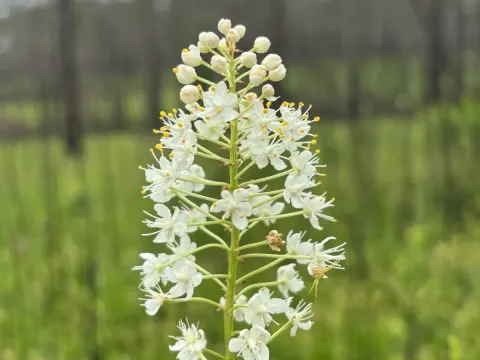
Stenanthium densum
Stenanthium densum
Stenanthium densum, often referred to in botany as a perennial member of the Melanthiaceae family, is a unique plant native to the southeastern United States. It is typically found in habitats such as pine savannas, wet prairies, and acidic boggy areas, which defines its specific cultivation needs.
What the section contains
Stenanthium densum
The plant requires highly specific soil conditions to thrive. It performs best in acidic, moisture-retentive soils that have excellent drainage characteristics. In a garden setting, replicating these conditions is essential, often involving the use of peat or organic amendments to maintain the necessary pH levels.
Botanically, this species is recognized by its basal rosette of long, grass-like leaves and a tall, slender flowering stalk. The inflorescence is a dense, elongated raceme of small, creamy-white or greenish flowers that bloom during the summer months, providing a subtle but distinct visual appeal.
Regarding climate, Stenanthium densum prefers regions with moderate temperatures and consistent moisture levels. It is not a drought-tolerant species; therefore, irrigation management during dry spells is critical to prevent the desiccation of the root system and to ensure proper development.
In terms of хозяйственное использование (horticultural usage), this plant is primarily valued as a specialty perennial for bog gardens or wetland margins. Its rarity and specific ecological requirements make it a prized specimen for advanced gardeners interested in native plant conservation and unique floral displays.
The main threats to this species are soil-borne fungal pathogens caused by improper drainage and stagnant water conditions. Root rot is a significant risk, particularly during dormant periods when the plant is not actively transpiring moisture from the soil.
Pest issues are generally limited to generalist garden pests, with slugs and snails posing the greatest threat to young, succulent foliage. Effective management involves maintaining a clean garden environment and applying physical barriers to deter these mollusks from reaching the base of the plant.