
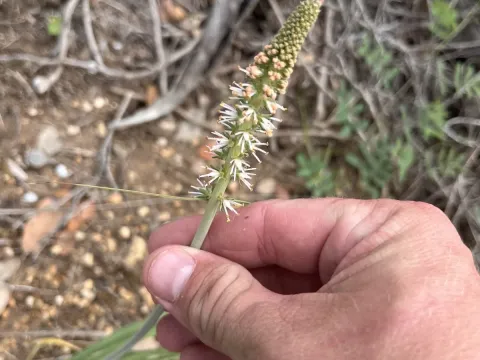
Schoenocaulon
Schoenocaulon
Schoenocaulon belongs to the Melanthiaceae family and is recognized primarily as a botanical source of alkaloids like veratrine.
What the section contains

Schoenocaulon
The plant grows from bulbs and is typically propagated by sowing seeds in a well-drained, porous growing medium during the spring season.
Proper depth of sowing is essential, as the seeds should be covered with only a thin layer of soil to ensure access to sufficient light for germination.
During the initial growth stages, maintaining consistent moisture is vital to support the development of a healthy root system and a primary bulb.
Spacing must be carefully considered to ensure that each plant has enough room for airflow, preventing the development of moisture-related issues.
Native to the regions of the Americas, this plant thrives in climates characterized by warm days and a distinct period of seasonal rest.
Soil requirements include excellent drainage and a neutral to slightly acidic pH, which helps the plant maintain optimal metabolic activity.
Excessive moisture is the primary enemy of this crop, as it leads to the rapid decay of the bulbs, which are highly sensitive to waterlogging.
Fertilization should be balanced, focusing on promoting root and bulb development while limiting excessive nitrogen that encourages weak foliage.
In regions with harsh winters, growing the plant in controlled greenhouse conditions is necessary to protect the bulbs from freezing temperatures.
The agricultural yield is measured by the quality and quantity of the seed material, which is the primary reservoir for bioactive compounds.
Farmers aim to maximize the alkaloid content, which is influenced by the maturity stage of the seeds at the time of harvesting.
Efficiency in harvesting relies on timing the collection of seed pods just before they fully dehisce to prevent significant field losses.
Post-harvest processing involves thorough drying and cleaning to remove impurities and ensure the stability of the active chemical components.
Standardization of the yield is critical for commercial applications, particularly when supplying raw material to the pharmaceutical sector.
Schoenocaulon possesses natural insecticidal properties due to its chemical profile, making it naturally resistant to many common agricultural pests.
The most significant threat to plant health remains fungal pathogens, which are almost always a result of poor soil drainage or excessive humidity.
Root rot and crown decay can quickly destroy a healthy patch if water management practices are neglected during the growing season.
Air circulation is key; dense planting can create microclimates that foster mold growth, particularly on the underside of the foliage.
Integrated disease management involves ensuring high-quality drainage and removing any individual plants that show signs of early decline.
The harvest phase begins when the seed capsules reach maturity and change color, indicating the peak concentration of alkaloids.
Manual harvesting techniques are preferred to handle the plant carefully and avoid damaging the fragile seeds during collection.
After collection, the seeds must be dried in a controlled environment away from direct heat to maintain their chemical integrity.
Storage should be conducted in sealed, opaque containers kept in a cool, dry place to prevent degradation of the active substances.
The final product is then utilized in the creation of natural insecticides or extracted for medical applications requiring veratrine compounds.