
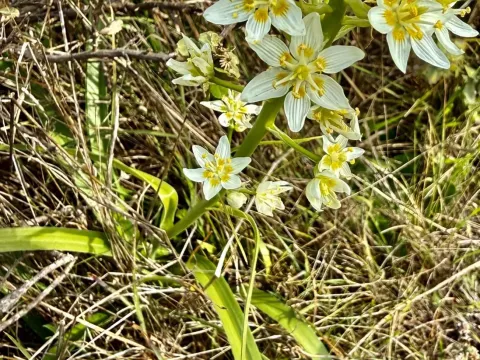
Toxicoscordion
Toxicoscordion
Toxicoscordion is a genus of perennial herbaceous bulbous plants belonging to the family Melanthiaceae. Often referred to colloquially as death camas, these plants are native to the western regions of North America, ranging from British Columbia to northern Mexico.
What the section contains
 Death camas
Toxicoscordion venenosum
Death camas
Toxicoscordion venenosum
 Marsh deathcamas
Toxicoscordion fontanum
Marsh deathcamas
Toxicoscordion fontanum
 Sand-lily
Toxicoscordion paniculatum
Sand-lily
Toxicoscordion paniculatum
 Small-flowered deathcamas
Toxicoscordion micranthum
Small-flowered deathcamas
Toxicoscordion micranthum
 Toxicoscordion brevibracteatus
Toxicoscordion brevibracteatus
Toxicoscordion brevibracteatus
 Toxicoscordion exaltatum
Toxicoscordion exaltatum
Toxicoscordion exaltatum
 Toxicoscordion fremontii
Toxicoscordion fremontii
Toxicoscordion fremontii
 Toxicoscordion nuttallii
Toxicoscordion nuttallii
Toxicoscordion nuttallii
Toxicoscordion
The plant thrives in varied environments, including rocky slopes, meadows, and open woodlands. It is remarkably resilient to climate fluctuations, favoring areas with moisture in the early spring followed by a dry dormant period in summer.
Botanically, it is characterized by a tunicated bulb and narrow, grass-like basal leaves. The inflorescence is a terminal raceme or panicle, producing small, pale flowers that typically appear in late spring to early summer.
From an agronomical perspective, there is no large-scale cultivation of this species. Instead, it is monitored closely as a botanical curiosity or, more commonly, as a dangerous weed in livestock production systems.
Soil requirements involve good drainage and moderate fertility; however, the plant’s ability to survive in nutrient-poor soils makes it a formidable competitor in its native range during the early grazing season.
The primary concern regarding Toxicoscordion is its extreme toxicity. It contains steroidal alkaloids that pose a fatal risk to sheep, cattle, and horses, especially when grazing early in the spring.
Ingestion of even small amounts of the foliage or bulbs can lead to severe gastrointestinal distress, rapid respiratory failure, and cardiac arrest in livestock. This presents a major challenge for pasture management.
The plant is resistant to most common pests due to its toxic chemical profile, which acts as a natural deterrent against herbivory. This allows it to persist in fields where other plants might be overgrazed.
Control strategies include mechanical removal before seed set to prevent further infestation of pastures. Selective chemical applications have shown varying levels of success depending on the maturity of the plants.
Effective pasture management requires frequent scouting during the early spring to identify and eradicate Toxicoscordion patches before livestock are turned out to graze, ensuring animal safety and productivity.