
Paris incompleta
Paris incompleta
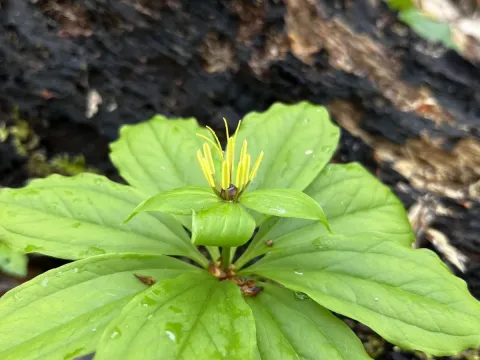
Paris incompleta is a perennial herbaceous plant belonging to the Melanthiaceae family. It is a distinct species known for its presence in the forest ecosystems of the Caucasus region, where it occupies highly specific ecological niches.
What the section contains
Paris incompleta
The plant demands deep shade and consistent soil moisture, typically growing in humus-rich, loose soils of broad-leaved forests. It does not tolerate direct sunlight or prolonged drought, which makes it an indicator of stable forest microclimates.
Botanically, it is characterized by a creeping rhizome and a singular erect stem topped with a whorl of broad, simple leaves. The solitary flower lacks true petals, a unique trait that is reflected in its scientific name, making it distinct from other related species.
There is no commercial agricultural cultivation for this species, as its biological requirements are strictly tied to natural forest environments. It is often studied in botanical research for its chemical composition rather than used as a crop or ornamental plant.
Regarding its utility, the plant contains toxic alkaloids and saponins, similar to its relatives in the genus Paris. Therefore, any historical or ethnobotanical use is strictly restricted and requires extensive knowledge of toxicology to avoid poisoning.
Environmental degradation, particularly deforestation and the loss of moist forest habitats, poses the most significant threat to the survival of Paris incompleta populations in the wild.
Common biological threats include slugs and snails that graze on the foliage during humid periods, potentially causing significant damage to individual plants. Additionally, root rot caused by poor soil drainage can negatively impact the plant's health in its natural habitat.