
Paris verticillata
Paris verticillata
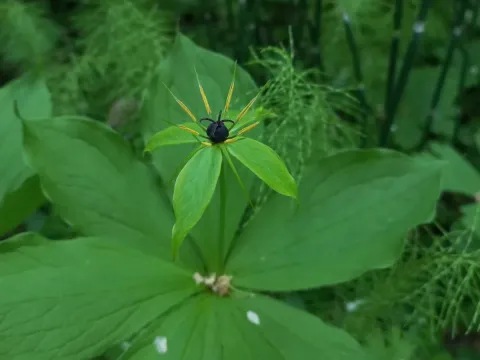
Paris verticillata, commonly known as whorled paris, is a perennial herbaceous plant belonging to the Melanthiaceae family. It is characterized by a single upright stem topped with a whorl of broad leaves, with a solitary flower developing in the center that matures into a dark, toxic berry.
What the section contains
Paris verticillata
The species originates from the temperate forest regions of East Asia. Its natural habitat is typically found in shaded, moist mixed-deciduous and coniferous forests, where it thrives in stable microclimates characterized by high humidity and protected soil layers.
In terms of soil requirements, this culture demands rich, well-drained, and organic-matter-rich substrates. It performs best in neutral to slightly acidic soils that mimic the natural forest floor environment. Consistent soil structure and humus content are critical for healthy rhizome development.
The species is highly shade-tolerant and sensitive to direct sunlight, which can cause significant physiological stress or leaf scorch. It requires a temperate climate with cool summers and sufficient moisture, showing low tolerance for extreme heat or arid conditions.
Agricultural management should focus on preserving the natural soil moisture balance. Mulching with organic forest materials is highly recommended to protect the root system, maintain appropriate soil temperature, and provide long-term nutrient release for the plant.
The most prevalent threats to Paris verticillata are root rot diseases triggered by waterlogged conditions. Excessive soil moisture, especially during cooler periods, promotes the growth of pathogenic fungi that can rapidly destroy the rhizome system.
Slugs and snails are the primary pests affecting this plant. They target the succulent foliage in early spring, often causing significant mechanical damage that reduces the plant's ability to conduct photosynthesis for the remainder of the season.
Fungal leaf spot infections may occur in environments with poor air circulation. To manage these risks, growers should ensure adequate spacing between plants and avoid overhead watering that keeps the leaves damp for extended periods.
Biological control methods are preferred, as the plant can be sensitive to aggressive chemical interventions. Improving soil drainage and removing debris from around the plant base are essential preventative measures against various soil-borne pathogens.
Regular monitoring during the vegetative phase is necessary to detect pest infestations early. Given the toxicity of the berries and foliage, care must be taken during handling, particularly when removing damaged or diseased plant tissue.