
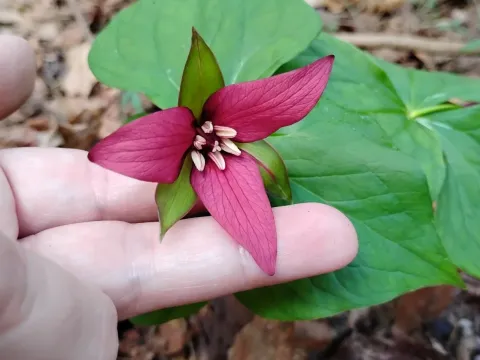
Red trillium
Trillium erectum
Red trillium (Trillium erectum) is a member of the Melanthiaceae family and can be propagated via seed or division. Seed propagation is a slow process that requires a period of cold stratification to break dormancy.
What the section contains
Red trillium
Seeds should be sown in autumn immediately after harvest. They often require two full winters before germination occurs, so the sowing site should be marked and kept free of weeds.
Division of the rhizome is the most practical method for gardeners. This task should be performed in late summer or early autumn when the foliage starts to senescence.
When dividing, ensure each segment of the rhizome contains at least one healthy bud. Rhizomes should be planted horizontally at a depth of 10 to 15 centimeters.
Young transplants require consistent moisture and protection from direct sun. Mulching with organic leaf mold will help stabilize soil temperature and retain necessary humidity.
This species is native to deciduous forests and thrives in cool, shady environments. Avoid planting in areas with full sun, as it will cause leaf scorch and plant decline.
The soil should be moist, rich in humus, and well-drained. A slightly acidic to neutral pH is preferred to match the natural woodland floor conditions where it originates.
Watering is critical during dry spells. Although the plant enjoys moisture, it will not tolerate waterlogged soil, which can lead to rapid rot of the rhizomatous structure.
Red trillium is highly hardy and can withstand severe winter conditions. It goes completely dormant during the winter, emerging with the first warm spring days.
It performs best in naturalistic plantings alongside other woodland perennials. Avoid frequent cultivation near the base of the plant to prevent damaging the fragile roots.
Slugs and snails are the most common pests, particularly affecting emerging shoots in spring. Implementing physical barriers or organic baits is recommended in high-pressure areas.
Root rot is a significant danger if the soil drainage is poor. Ensuring a loose, aerated soil structure is the best preventative measure against fungal infection.
Leaf spot diseases can occur if air circulation is insufficient. Thinning out surrounding vegetation can improve airflow and reduce humidity around the foliage.
Rodents such as voles may occasionally feed on the rhizomes during winter. Using wire cages or protective planting techniques can safeguard the bulbs from damage.
Weakened plants are more susceptible to opportunistic pathogens. Proper site selection and maintaining optimal soil moisture levels are essential for the plant's long-term health.