
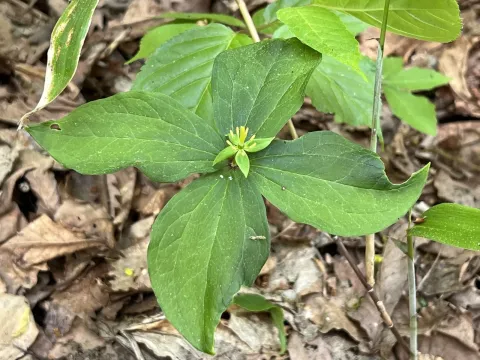
Paris tetraphylla
Paris tetraphylla
Paris tetraphylla is a perennial herb belonging to the Melanthiaceae family. It is characterized by a single whorl of four leaves at the top of the stem and a solitary, distinct flower appearing in the spring.
What the section contains
Paris tetraphylla
The native habitat includes the moist, temperate, and shady forests of East Asia, such as Japan and China. The species thrives in woodland conditions characterized by rich organic matter, deep soil, and high levels of shade.
For successful cultivation, the soil must be well-drained and kept consistently moist. Excessive heat and direct sunlight are detrimental, so providing a canopy or artificial shade is essential for the plant's survival.
Growth is generally slow, and the plant requires specific environmental stability. Soil should have a slightly acidic pH and should be enriched with leaf mold to mimic the natural floor environment of its origin.
The primary use of this crop is pharmacological. Various compounds extracted from the rhizomes are researched for medicinal applications, though like other species in the genus, it contains complex alkaloids.
Root rot is the most significant disease threat to Paris tetraphylla. This is usually triggered by poor drainage and excessive irrigation, which damages the delicate root system in humid environments.
Slugs and snails present a constant threat to the foliage, especially in the early stages of development. Regular manual checks and environmental management are recommended to minimize damage to the leaves.
Soil-borne nematodes can stunt growth and weaken the plant, making it more susceptible to environmental stress. Maintaining healthy, balanced soil microflora is key to natural resistance.
Fungal infections of the stem and leaves can occur if the planting density is too high. Improving airflow and spacing plants properly helps to mitigate the risk of spreading pathogens.
As a rule, agricultural management focuses on prevention rather than chemical intervention, as the plant's intended use as a medicinal source requires clean, residue-free cultivation.