
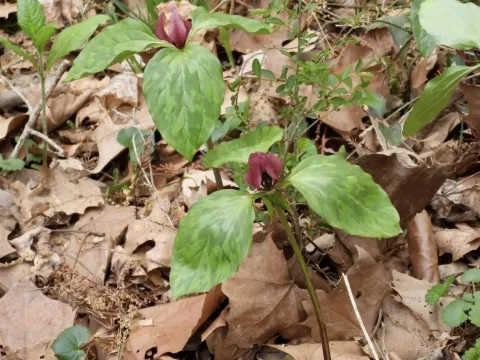
Trillium recurvatum
Trillium recurvatum
Trillium recurvatum, commonly known as the prairie trillium, is a herbaceous perennial plant belonging to the Melanthiaceae family. It is native to the deciduous woodlands of North America, where it thrives in shaded, nutrient-rich environments.
What the section contains
Trillium recurvatum
The plant is characterized by its distinctive mottled leaves and a solitary flower with dark maroon petals that recurve backward. It grows from a fleshy rhizome and typically reaches a height of 20 to 40 centimeters, forming an elegant component of a woodland garden.
Cultivation requires conditions that mimic its natural forest habitat. The plant prefers consistent moisture throughout the growing season and cannot tolerate prolonged drought, which often leads to premature senescence of the foliage.
Light requirements are strictly shade or partial shade. Exposure to intense afternoon sun will cause leaf scorching and stress the plant, significantly reducing its vigor and flowering potential in subsequent seasons.
Soil quality is paramount for success. The ideal substrate is well-draining, slightly acidic, and rich in organic matter. Gardeners should incorporate leaf mold or high-quality compost to ensure the necessary structure for healthy root development.
Slugs and snails represent the most significant threat to Trillium recurvatum. They are particularly attracted to the tender emerging shoots in the spring and can cause extensive damage to the leaves within a short period.
Root rot is a common issue caused by poor drainage or overwatering. Maintaining a moist but aerated soil profile is essential; therefore, heavy clay soils must be amended with grit or perlite to facilitate excess water runoff.
Fungal leaf spots can appear if the foliage stays wet for too long in stagnant air conditions. Ensuring proper spacing between plants helps maintain airflow, which significantly reduces the risk of fungal proliferation.
Aphids occasionally infest the developing buds, causing distortion and preventing the flower from opening properly. Integrated pest management, including natural predators or mild horticultural soaps, is effective if caught early.
Small mammals, such as voles, may occasionally dig up and feed on the rhizomes during winter. Protecting the planting site with physical barriers or repellent treatments can be necessary in areas with high rodent populations.