
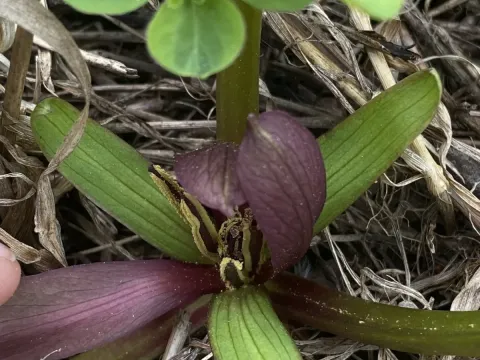
Trillium petiolatum
Trillium petiolatum
Trillium petiolatum, commonly known as the stalked trillium, is a perennial herbaceous plant belonging to the Melanthiaceae family. It is native to the Pacific Northwest of the United States, where it inhabits moist woodland environments.
What the section contains
Trillium petiolatum
This species is distinct for its lack of an above-ground stem, as its large, dark green leaves rise on long petioles directly from the rhizome. The flower, appearing early in the spring, is typically sessile and nestles among the leaf bases, exhibiting deep reddish-purple hues.
Successful cultivation requires soil that is rich in organic matter, such as leaf mold or compost. The site must be well-drained to prevent root rot, yet it should retain sufficient moisture to support the plant throughout the growing season.
Regarding light conditions, Trillium petiolatum thrives in deep shade or dappled sunlight. It is an excellent choice for woodland gardens, where it can replicate its natural habitat. Avoid planting in areas exposed to direct afternoon sun, which can scorch the leaves.
The cultural maintenance includes applying a layer of organic mulch annually, which mimics the natural leaf litter found in forests. This helps to regulate soil temperature and retain moisture, which is essential for the healthy development of the plant's root system.
The most common disease affecting this plant is fungal root rot, which occurs in poorly drained or waterlogged soils. Early detection involves monitoring for signs of drooping or discoloration, requiring an immediate adjustment to the watering regime or soil structure.
Pests such as slugs and snails are significant threats to Trillium species, as they find the tender spring foliage highly palatable. Integrated pest management strategies, such as physical barriers or slug pellets, are effective in controlling these populations.
Rodents, particularly voles, may target the underground rhizomes during the dormant winter period. Protective measures, including planting within wire mesh baskets, can be used to prevent significant damage to the plant population in the garden.
Environmental stress, including extreme dry spells, can lead to early senescence of the foliage. To mitigate this, supplemental watering during late spring and summer is necessary, ensuring the root zone stays consistently hydrated without becoming saturated.
While generally hardy, the plant can be susceptible to viral diseases that cause leaf mottling. Keeping the planting site free from weeds and providing adequate space for air circulation between individual specimens will help reduce the risk of infestation and disease spread.