
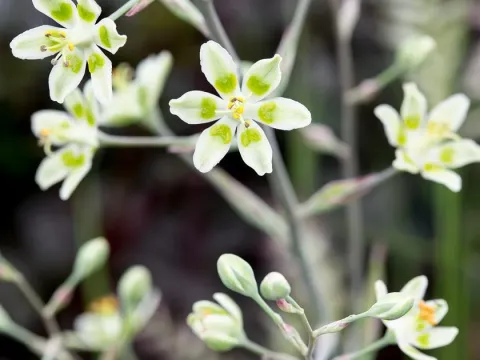
Anticlea
Anticlea
Anticlea is a genus of perennial bulbous plants belonging to the Melanthiaceae family. These plants are known for their elegant racemose inflorescences and are closely related to members of the former Zigadenus genus, which they were separated from due to genetic studies.
What the section contains


Anticlea
Native to North America, these plants typically inhabit moist meadows, rocky slopes, and streambanks. Their natural habitat indicates a preference for cool environments with consistent moisture, which should be replicated in a garden setting for optimal performance.
When cultivating Anticlea, it is essential to provide well-draining, nutrient-rich soil. The root system is sensitive to waterlogging, so incorporating gravel or perlite into the planting hole is recommended to ensure proper aeration and drainage around the bulbs.
These plants thrive in locations that receive partial shade or filtered sunlight. While they can tolerate more light in cooler climates, protecting them from the intensity of midday sun in hotter regions is crucial to prevent dehydration and foliage scorch.
Maintenance involves regular watering during the active growing season, ensuring the soil remains moist but not saturated. Mulching the area around the plants helps maintain uniform soil temperatures and prevents moisture loss during periods of heat.
The primary concern for Anticlea growers is the susceptibility to fungal pathogens such as Fusarium and various bulb rots. These infections often proliferate when plants are subjected to poorly drained soil or excessive overhead irrigation.
Insect pests, including bulb flies and nematodes, can damage the underground parts of the plant, often leading to structural weakness. Regular inspections of the bulbs and soil surface can help identify signs of infestation at an early stage.
Preventive measures include the application of fungicide drenches during the planting phase and ensuring strict sanitary practices. Removing plant debris from the garden beds at the end of the season reduces the risk of overwintering pathogens.
Using high-quality, pest-free planting stock is the most effective defense against soil-borne issues. If infestation is detected, infected plants should be removed and destroyed to prevent the spread of pests to healthy clusters.
Maintaining a balanced ecosystem within the garden encourages beneficial predators that help control pest populations naturally. Proper plant spacing is also essential to ensure good airflow, which significantly reduces the humidity that fungal pathogens require to thrive.