
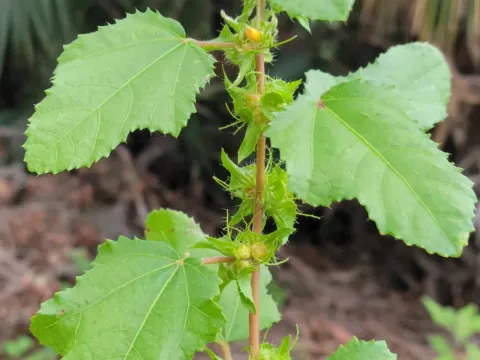
Malachra urens
Malachra urens
Malachra urens is a heat-loving plant that thrives in tropical climates, necessitating sowing only after soil temperatures are consistently high. Planting usually coincides with the beginning of the rainy season, ensuring the plants receive sufficient moisture for early development.
What the section contains
Malachra urens
The seeds are typically sown in rows with a spacing of approximately 40 to 50 centimeters to allow for optimal plant growth. A sowing depth of 2 to 3 centimeters is recommended, as deeper planting may cause the seedling to exhaust its energy reserves before breaking through the soil surface.
Consistent plant density is crucial for producing high-quality stalks. Once seedlings emerge, thinning is often performed to ensure that each plant has sufficient access to light, water, and soil nutrients, which directly impacts the yield of the crop.
Effective seedbed preparation is essential, requiring a fine-crumbly soil structure that promotes uniform germination. Using high-quality, treated seeds is a recommended practice to avoid early-stage crop failures and ensure a healthy stand from the very beginning of the season.
In regions with distinct dry seasons, the planting schedule must be carefully managed to ensure the plant completes its main growth phase during periods of adequate rainfall. This strategy minimizes the risk of stunted growth and ensures the development of long, strong fibers.
As a member of the Malvaceae family, Malachra urens shares many physiological traits with other tropical mallows. It is native to Central and South America, where it has evolved to flourish in high-temperature environments with significant annual precipitation.
The plant requires well-drained, fertile soil, ideally with a neutral to slightly acidic pH. Poorly drained or waterlogged soils are detrimental to the root system and often lead to the development of fungal diseases, which can significantly reduce the fiber yield.
Intense solar radiation is critical for the development of Malachra urens. It is an obligate sun-loving species; therefore, any shading from adjacent trees or improper planting density will negatively affect the photosynthesis rate and the mechanical strength of the resulting fiber.
Nutrient management focuses primarily on nitrogen application during the vegetative growth stage to stimulate stem elongation. Potassium and phosphorus are also necessary to ensure sturdy stem structure and resistance against environmental stress factors like strong tropical winds.
A notable feature of the plant is its stinging hairs, which act as a natural defense mechanism against herbivores and certain insect pests. While beneficial for the plant's survival, this trait requires agricultural workers to use protective clothing during field management tasks.
Harvesting is typically conducted during the phase of technical maturity, when the stems reach their maximum size before they lignify too heavily. At this stage, the fiber quality is at its peak, providing the best tensile strength for potential industrial applications.
Mechanical harvesting is the preferred method for large-scale production, involving specialized machinery that cuts the stems close to the ground. Prompt handling after cutting is necessary to maintain the integrity of the fiber and prevent the start of premature decomposition.
Due to the plant's stinging nature, harvesting requires specific safety precautions. Agricultural equipment must be cleaned regularly, and workers need protective gear to avoid skin contact with the stinging hairs, which can cause significant irritation.
Post-harvest processing often involves retting, a biological process used to extract fibers from the stem's woody tissues. This step must be performed in a controlled environment to ensure the fibers maintain their desired elasticity and brightness.
Field hygiene is an important aspect of post-harvest management. Removing plant debris from the field prevents the buildup of pathogens, ensuring that the soil remains healthy for the next crop cycle in the rotation program.