
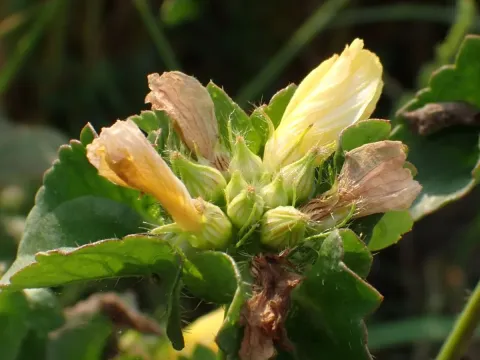
Malachra capitata
Malachra capitata
Malachra capitata is an annual herbaceous plant belonging to the Malvaceae family. Originating from the tropical regions of the Americas, it is widely recognized for its high-quality bast fibers, which are extracted from the stem for use in various textile applications.
What the section contains
Malachra capitata
The cultivation process begins with sowing in well-warmed soil. The seeds require stable temperatures of at least 18-20 degrees Celsius to ensure rapid germination. Cold and damp soil conditions should be avoided, as they significantly delay emergence and weaken the seedlings.
Spacing between rows should be maintained at 20-30 centimeters, which allows for uniform plant growth and simplifies mechanical maintenance. A consistent planting depth of 2-3 centimeters ensures that the seeds have enough energy to emerge without drying out in the surface layer.
During the initial stages of development, the plant grows relatively slowly. Consequently, farmers often employ pre-sowing weed control strategies to ensure the young Malachra plants can establish themselves without competition from aggressive weed species.
Modern precision seeders are recommended for industrial cultivation to achieve optimal plant density. Consistent plant spacing ensures that the stalks grow straight and uniform, which is critical for maximizing the yield and quality of the fiber during the harvesting phase.
Malachra capitata is a heat-loving and sun-loving plant that thrives in regions with long growing seasons. Exposure to full sunlight is essential, as even minor shading can lead to thin, weak stalks and a significant reduction in total fiber yield.
The plant performs best in fertile loamy or alluvial soils that provide both moisture retention and proper drainage. Soil pH should ideally be near neutral, although the plant shows some adaptability to slightly acidic or alkaline conditions if nutrients are balanced.
Water requirements are highest during the period of intensive vegetative growth. While the plant possesses moderate drought tolerance, providing supplemental irrigation during dry spells ensures that the stalks grow tall and thick, leading to higher biomass and superior fiber quality.
Nitrogen fertilization is vital for promoting rapid growth during the vegetative phase. A balanced approach including phosphorus and potassium is necessary to enhance the strength of the fiber and improve the plant's overall resistance to environmental stressors.
Regular cultivation and loosening of the soil between rows help in aeration and moisture management. By maintaining healthy soil structure, the grower encourages deep root development, which is crucial for the overall vigor of the Malachra plant throughout the season.
Common pests, including aphids and spider mites, can damage the leaves and succulent parts of Malachra capitata. Regular field scouting is necessary to catch infestations early, allowing for timely intervention with biological control methods or selective pesticides.
Fungal diseases such as root rot can occur in areas with poor drainage or chronic waterlogging. Crop rotation, which involves moving the crop to a different field every few years, is the most effective strategy for breaking the life cycle of soil-borne pathogens.
Leaf spot diseases, often caused by Cercospora species, can reduce the photosynthetic capacity of the plant. Maintaining adequate spacing between plants to improve airflow is a simple yet effective way to reduce the incidence of fungal outbreaks in the field.
Nematodes may pose a threat in sandy or light soils, leading to stunted growth and yellowing of the foliage. Integrating resistant varieties into the cropping system and managing organic matter content can help mitigate the damage caused by these microscopic soil pests.
Integrated pest management (IPM) is essential for sustainable production. By combining cultural practices like debris removal after harvest with responsible chemical use, farmers can protect their crops while maintaining the quality standards required by the textile industry.
The optimal harvest window for fiber production is during the early flowering stage. At this point, the bast fibers are fully formed but have not yet become overly lignified, resulting in a product that is both soft and strong enough for industrial textile processing.
Mechanical harvesting is typically performed using specialized mower-conditioners that cut the stalks cleanly at the base. The stalks are often left in the field for a short period to allow for partial drying, which aids in the subsequent retting process of the fibers.
When harvesting for seeds, the process is delayed until the seed capsules are fully matured and turned brown. Combine harvesters are adjusted to operate at lower speeds, ensuring that the seeds are collected efficiently without suffering mechanical damage.
Post-harvest handling is critical, especially for seeds, which must be dried to 12-14 percent moisture content to prevent spoilage. Storage in a cool, well-ventilated area ensures that the seeds maintain their viability for the following planting season.
By-products, such as the woody core (shives) remaining after fiber extraction, can be repurposed as animal bedding, fuel, or a substrate for composite materials. This holistic approach to harvesting enhances the economic value of Malachra capitata cultivation.