
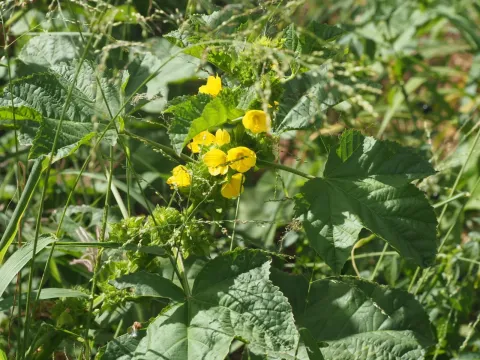
Malachra alceifolia
Malachra alceifolia
Malachra alceifolia is a thermophilic plant that requires warm soil conditions for successful germination, ideally starting when soil temperatures reach 15-18 degrees Celsius.
What the section contains
Malachra alceifolia
The sowing window should be selected to avoid any risk of frost, as the seedlings are highly susceptible to cold damage during their early growth stages.
Seeds should be planted at a depth of 2 to 4 centimeters, depending on the soil texture, to ensure optimal moisture retention during the initial germination phase.
Consistent soil moisture is essential for rapid emergence, so supplemental irrigation is recommended if the soil is dry at the time of planting.
Row spacing should be maintained at approximately 60 centimeters to allow adequate sunlight penetration and air circulation for the developing plants.
Malachra alceifolia is a member of the Malvaceae family, often cultivated for its long, flexible fibers similar to those of jute or kenaf.
Originating from tropical regions, this crop thrives in environments with high light intensity and consistently warm temperatures throughout the growing season.
The ideal soil conditions consist of fertile, well-draining loams or sandy soils with a pH level ranging from neutral to slightly acidic.
The plant has a significant water demand during its active vegetative growth phase, yet it requires proper drainage to prevent root zone saturation.
- Optimal temperature: 25-30 degrees Celsius.
- Sunlight requirement: Full sun exposure.
- Soil preferences: Organic-rich, well-aerated soil.
The yield of fiber mass in Malachra alceifolia depends largely on effective agronomic management, including precise nutrient application and soil preparation.
Given its fast-growing nature, the crop can produce a significant amount of biomass in a relatively short period, making it economically attractive.
Nitrogen fertilization is critical during the stem-elongation phase to maximize the yield of high-quality bast fibers within the stalk.
Proper field maintenance ensures that the plant allocates energy towards stem growth rather than excessive flowering, which is essential for high fiber output.
Average yield metrics compare favorably with other regional fiber crops when optimized for local climatic conditions and soil fertility levels.
Common pests affecting Malachra alceifolia include aphids and spider mites, which can cause significant stress to the foliage and impact growth rates.
Excessive humidity combined with high temperatures can encourage the development of fungal infections, such as stem and root rots, which are difficult to eradicate.
Weevil populations can also pose a threat to the crop, potentially damaging stems and compromising the integrity of the harvestable fiber.
Implementing a strict crop rotation schedule is vital to break the life cycles of soil-borne pathogens and pests associated with Malvaceae plants.
Integrated pest management strategies are recommended, focusing on early detection and targeted treatments to maintain high fiber quality.
The optimal harvest window for Malachra alceifolia occurs during the mass flowering stage, when the fiber content is at its peak quality.
Delaying the harvest results in increased lignification of the stems, making the fiber coarser and significantly harder to extract during the processing phase.
Mechanical harvesting using specialized mowers is standard practice, which cuts the stems for efficient bundling and field drying.
Processing involves retting the stalks to separate the fiber from the woody core, a step that requires careful monitoring to ensure fiber strength is maintained.
Proper harvest timing is the most critical factor in achieving the desired market quality and ensuring the profitability of the fiber crop operation.