
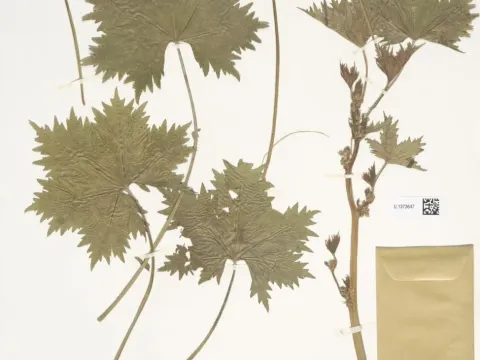
Malva oxyloba
Malva oxyloba
Malva oxyloba belongs to the Malvaceae family. In agricultural practices, sowing is typically carried out in early spring once the soil temperature consistently reaches 8–10 degrees Celsius, allowing the plant to leverage moisture levels effectively.
What the section contains
Malva oxyloba
Precision in sowing depth is vital; seeds should be placed at 2–3 centimeters in lighter soils and around 1.5 centimeters in heavier loams. Correct depth ensures that the seed energy is sufficient to push through the soil surface without depletion.
A fine-textured, uniform seedbed is necessary for successful germination. Growers often use rollers both before and after seeding to improve soil contact with the seeds, which significantly boosts emergence rates.
In temperate climates, Malva oxyloba displays vigorous early development. The plant’s ability to quickly close rows makes it highly competitive against weeds, reducing the reliance on intensive herbicide programs.
Crop rotation remains a fundamental principle for this species. Integrating it into a rotation with cereals or row crops helps minimize the build-up of specific soil-borne pathogens associated with the Malvaceae family.
The plant is categorized as both light-loving and heat-loving, requiring significant sun exposure to accumulate maximum vegetative biomass. Shaded areas significantly impede growth and lower overall yields.
Malva oxyloba thrives in fertile, well-drained loamy or chernozem soils with a neutral or slightly alkaline pH level. Acidic soils can restrict root development and limit nutrient uptake efficiency.
While the species exhibits moderate drought tolerance, adequate moisture is essential during the active growth phase. The most critical period for water intake occurs during the budding and early flowering stages.
Strategic application of nitrogen-based fertilizers promotes rapid leaf development. However, excessive fertilization must be avoided to prevent stem lodging, which can negatively impact the ease of mechanical harvesting.
The ideal temperature range for continuous growth is between 20–25 degrees Celsius. Although the plant can withstand moderate fluctuations, prolonged exposure to cold temperatures will pause metabolic activity.
The primary agricultural use of Malva oxyloba is in the forage sector. It is valued for its high protein content and overall nutritional profile, making it a suitable green feed option for livestock.
Botanically, it is an herbaceous plant with an upright stem and distinct lobed leaves. These features contribute to its ability to yield a high quantity of quality green fodder per hectare when managed correctly.
Beyond its value as animal feed, the species is frequently utilized as a green manure or cover crop. Its deep root system improves soil structure, while the biomass provides organic matter upon decomposition.
Harvesting for silage or dried feed is also common. When processed correctly, the plant retains its nutritional integrity, offering a reliable feed source for winter feeding programs in livestock operations.
Total yield per season is contingent upon the level of agronomic management and regional weather patterns. With multiple cuts possible in a single season, it remains a productive choice for forage systems.
The most common threats to Malva oxyloba include fungal pathogens such as rust and various leaf spot diseases, which thrive in high-humidity environments with poor canopy ventilation.
Pests like aphids can cause considerable damage by sucking nutrients from the foliage, leading to stunted growth. Beetles may also feed on the edges of leaf blades, further reducing the photosynthetic capacity of the plant.
Integrated pest management, including the removal of weeds that act as disease reservoirs, is essential. Maintaining proper spatial isolation between fields helps prevent the rapid spread of infections.
Fungicides and insecticides should be applied based on professional monitoring and in strict accordance with safety intervals to ensure the harvested biomass remains safe for consumption by livestock.
- Continuous phytosanitary monitoring of the fields.
- Use of disease-resistant seeds and planting materials.
- Sanitation practices including the removal of crop residues post-harvest.
The optimal time to harvest for high-quality green fodder is at the beginning of the flowering phase. At this point, the plant achieves the best balance between protein concentration and crude fiber levels.
For seed production, harvesting must be timed accurately. It should occur when the lower seed pods turn brown, but before the pods naturally crack open to prevent significant yield losses.
Mechanical harvesting requires proper calibration of the cutting height to ensure the plant can successfully regenerate if multiple cuts are intended during the same growing season.
Post-harvest logistics are crucial; the green mass must be transported or processed into silage immediately to prevent rapid fermentation and loss of nutritional value caused by heat buildup.
Efficient harvesting strategies depend heavily on field preparation. Keeping the soil surface level and free from debris allows machinery to operate at optimal speeds, maximizing the efficiency of the harvest window.