
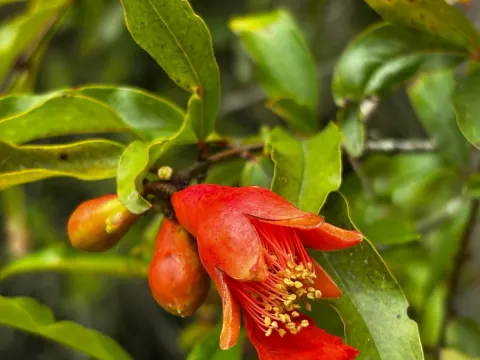
Pomegranate
Punica L.
The pomegranate (Punica granatum) belongs to the Lythraceae family. In commercial horticulture, the crop is primarily propagated vegetatively through cuttings to ensure the consistency of varietal characteristics from the parent plant.
What the section contains

Pomegranate
Planting seedlings in open ground is typically carried out in spring once soil temperatures reach 12–14 degrees Celsius, ensuring a successful root establishment before the onset of extreme summer heat.
Selecting a location with full sun exposure is critical for pomegranate cultivation, as the plant is highly photophilic. Inadequate sunlight results in poor flowering and inferior fruit quality.
Maintaining proper spacing is essential for canopy health and aeration. A standard distance between trees is 3–4 meters, which facilitates mechanical operations and reduces the risk of fungal infections.
While some varieties are grown in containers in colder climates, large-scale commercial production thrives in subtropical zones where the plant receives sufficient thermal accumulation throughout the year.
Pomegranates prefer well-drained loamy or sandy-loam soils with a neutral or slightly alkaline pH. Standing water is detrimental to the root system and must be avoided through effective soil drainage.
The plant is known for its remarkable drought tolerance; however, consistent moisture is necessary during active growth and fruit development to ensure high yield and fruit size.
An ideal temperature range for vegetative growth is between 25 and 30 degrees Celsius. Sustained temperatures below -10 degrees Celsius can cause significant frost damage to branches and stems.
Soil fertility management involves the balanced application of organic matter and mineral fertilizers. Potassium-rich fertilizers are particularly beneficial for improving fruit sweetness and overall tree vigor.
In arid regions, drip irrigation is the preferred method for managing water requirements, as it delivers precise moisture levels directly to the root zone without creating waterlogging conditions.
Pomegranate yield is highly dependent on tree age, cultivar selection, and orchard management practices. A mature, well-tended tree can produce between 30 and 60 kilograms of fruit annually.
Initial fruiting may occur as early as the third year, but commercial-scale production typically begins when trees reach 7–10 years of age, depending on the specific growth conditions.
Standard agrotechnical practices such as canopy thinning and sucker removal are crucial for diverting plant energy toward fruit development and ensuring the production of high-quality market-grade fruits.
Maximum productivity is generally achieved when the trees are between 15 and 30 years old. After this peak, rejuvenation pruning or gradual orchard renewal is often required to sustain profitable yields.
Modern intensive orchards utilize precise nutritional programs and water management strategies to maximize yield and ensure consistent fruit quality across the harvest season.
The pomegranate butterfly is a significant pest that damages fruit by boring into the ovaries, leading to premature drop or rot. Effective control relies on integrated pest management and timely applications.
Powdery mildew represents a persistent threat, especially in humid environments with poor air circulation. Proper pruning is essential to improve airflow and reduce fungal pressure within the canopy.
Various leaf spot diseases can compromise the photosynthetic capacity of the tree, necessitating proactive fungicide spray schedules during critical growth stages to protect the foliage.
Aphids and spider mites are common pests that infest young shoots, causing leaf curling and reduced plant vigor. Early detection and targeted treatment are vital for maintaining tree health.
Fruit cracking, often caused by irregular soil moisture or sudden rain following dry spells, not only ruins the appearance of the fruit but also invites secondary infections and rot.
Harvesting is performed when fruits reach technical maturity, characterized by a specific skin color change and a metallic resonance when tapped, indicating a fully developed internal aril.
Fruits are harvested by hand using clippers; it is important to cut the stem carefully rather than pulling the fruit, which can damage the delicate skin and shorten shelf life.
Post-harvest, fruits undergo grading and sorting based on size, weight, and visual quality. Healthy, blemish-free fruits are selected for long-term storage or immediate market distribution.
Optimal storage conditions involve cool, well-ventilated environments with controlled humidity, which helps prevent dehydration and preserves the quality of the arils for several months.
Logistics require careful handling and the use of padded crates to prevent bruising during transportation, ensuring that the fruit reaches the consumer in prime condition.