
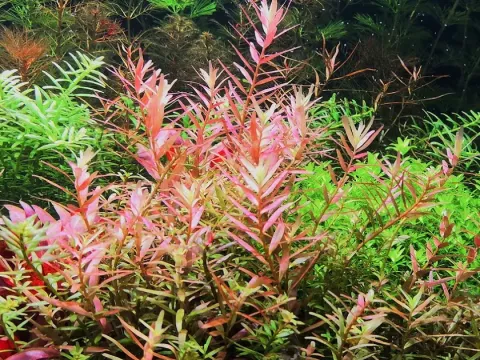
Rotala
Rotala
Rotala is a genus of herbaceous plants belonging to the Lythraceae family. Naturally distributed throughout tropical and subtropical regions of Asia, Africa, and Australia, these plants are predominantly found in wetlands, riverbanks, and shallow stagnant waters.
What the section contains
 Giant red rotala
Rotala macrandra
Rotala cordata
Rotala cordata
Rotala densiflora
Rotala densiflora
Giant red rotala
Rotala macrandra
Rotala cordata
Rotala cordata
Rotala densiflora
Rotala densiflora
 Rotala diversifolia
Rotala diversifolia
Rotala diversifolia
 Rotala filiformis
Rotala fimbriata
Rotala fimbriata
Rotala gossweileri
Rotala gossweileri
Rotala filiformis
Rotala filiformis
Rotala fimbriata
Rotala fimbriata
Rotala gossweileri
Rotala gossweileri
 Rotala hexandra
Rotala hybrid
Rotala hybrids
Rotala hexandra
Rotala hexandra
Rotala hybrid
Rotala hybrids
 Rotala indica
Rotala leptopetala
Rotala leptopetala
Rotala indica
Rotala indica
Rotala leptopetala
Rotala leptopetala
 Rotala mexicana
Rotala mexicana
Rotala mexicana
 Rotala ramosior
Rotala rosea
Rotala rosea
Rotala ramosior
Rotala ramosior
Rotala rosea
Rotala rosea
 Rotala rotundifolia
Rotala rotundifolia
Rotala rotundifolia
 Rotala wallichii
Rotala wallichii
Rotala wallichii
Rotala
Botanically, Rotala is defined by its versatile nature, often exhibiting dimorphism between its submerged and emersed leaf forms. The stems are typically thin and fragile, with leaves arranged in opposite pairs or whorls depending on the specific species and environmental conditions.
Successful cultivation of Rotala requires high-intensity lighting, which is crucial for triggering vibrant red or pink coloration in many popular species. The water must be stable, with supplemental CO2 injection often necessary to maintain high growth rates and overall plant health.
Soil requirements involve a nutrient-rich substrate, as the roots absorb a significant portion of the minerals needed for growth. Regular pruning is a fundamental part of the agricultural maintenance for this crop, preventing the plant from becoming leggy and ensuring sufficient light penetration to lower leaves.
In terms of economic and practical use, Rotala is a staple in the aquarium trade and aquascaping industry. It is highly valued for its aesthetic appeal, being used to create dense, colorful backgrounds and midground bushes in planted tank designs worldwide.
The primary threats to Rotala health include nutrient imbalances that lead to the proliferation of nuisance algae, such as hair algae or black beard algae. These organisms compete for light and CO2, often outcompeting the Rotala if left unchecked.
Additionally, improper water chemistry, specifically high carbonate hardness or rapid pH swings, can cause the plant to drop its leaves or dissolve. Pests like aphids or spider mites can pose a risk only when the plant is grown in its emersed form within paludariums or greenhouses.