
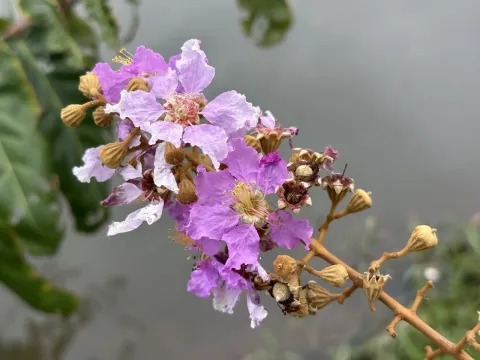
Lagerstroemia floribunda
Lagerstroemia floribunda
Lagerstroemia floribunda is a prominent member of the Lythraceae family. Native to the tropical forests of Southeast Asia, this species is highly valued for its striking floral displays and ornamental bark.
What the section contains
Lagerstroemia floribunda
The plant thrives in warm tropical or subtropical climates. It requires full sunlight exposure to maintain its bloom density and structural integrity, making it an ideal choice for open garden spaces.
Soil conditions are critical for its growth; the species performs best in fertile, well-draining soils with a neutral or slightly acidic pH level. Waterlogging is detrimental and must be strictly avoided.
Agrotechnical care involves regular irrigation during dry spells and the application of balanced fertilizers during the active growing season. Mulching around the base can help maintain soil moisture levels.
Beyond its aesthetic function, the wood of Lagerstroemia species is sometimes utilized in local construction, although the primary agricultural focus remains on horticultural and landscape propagation.
Powdery mildew is the most significant pathological threat to Lagerstroemia floribunda, especially in humid and poorly ventilated environments. It appears as a white fungal growth on the foliage.
Pests such as aphids and scale insects are commonly encountered. These sap-sucking insects can stunt growth and provide entry points for secondary viral or fungal infections if left untreated.
Integrated pest management, including the use of neem oil or targeted insecticides, is recommended for controlling infestations without harming beneficial garden insects.
Pruning is essential for both aesthetic shaping and disease prevention. Removing overcrowded branches improves airflow, which significantly reduces the risk of fungal outbreaks in the crown.
Regular monitoring of the foliage and stems allows for the early detection of issues, ensuring that the plant remains healthy and continues to produce its characteristic flower clusters.