
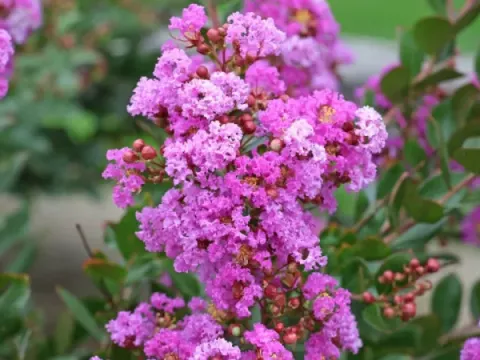
Lagerstroemia hybrids
Lagerstroemia hybrids
Lagerstroemia hybrids belong to the Lythraceae family and represent highly valued ornamental plants. These cultivars are specifically bred to enhance cold hardiness and disease resistance, effectively combining the visual traits of their ancestors from the Asian subtropics.
What the section contains
Lagerstroemia hybrids
These plants are primarily cultivated in regions with warm temperate climates. Their geographical spread has expanded significantly as breeders developed varieties capable of thriving in varied ecological niches while maintaining their signature long-blooming period.
Cultivation requires full sun exposure to ensure maximum bloom density. The soil must be well-drained, fertile, and slightly acidic or neutral. Proper site selection is critical, as the plant cannot tolerate poorly drained clay soils that remain waterlogged for extended periods.
The agrotechnical management involves annual pruning in early spring to shape the canopy and remove dead wood. Fertilizer applications should be managed carefully, focusing on balanced nutrients to support vigorous vegetative growth without compromising the flowering cycle.
In landscaping, Lagerstroemia hybrids are used for their high aesthetic appeal as specimen trees or clustered shrubs. They serve as a focal point in garden designs due to their vibrant, papery flowers and the unique, exfoliating bark that adds year-round visual interest.
The most significant pathological issue is powdery mildew, which can severely impact foliage quality if air circulation is insufficient. Cultural control methods, such as strategic pruning to open the center of the tree, are often combined with fungicide applications.
Insect pests, including aphids and various scale insects, pose a recurring challenge by extracting plant sap and promoting the growth of sooty mold. Integrated pest management (IPM) protocols, including the use of horticultural oils and systemic insecticides, are recommended to maintain plant health.