
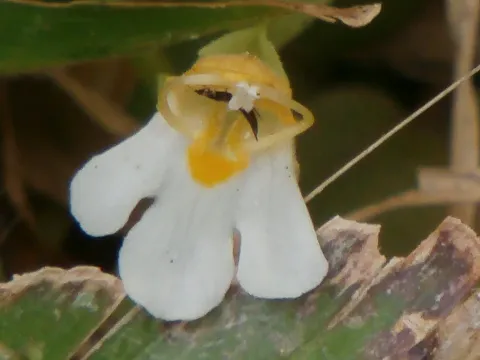
Lindernia diffusa
Lindernia diffusa
Lindernia diffusa is a herbaceous plant belonging to the Linderniaceae family. Native to tropical regions of Africa and the Americas, it is well-adapted to humid environments where it thrives in moist, shaded undergrowth.
What the section contains
Lindernia diffusa
Botanically, the plant is characterized by its prostrate habit, with stems that easily root at the nodes. This growth pattern makes it an excellent candidate for ground cover, as it forms a dense, mat-like structure over the substrate.
Climate requirements for this species include high humidity and stable tropical temperatures. It performs best in environments that mimic its native habitat, avoiding direct, harsh sunlight and extreme temperature fluctuations.
The soil should be nutrient-rich and well-draining, yet capable of retaining moisture. A slightly acidic to neutral pH level is ideal for supporting the plant's metabolic processes and nutrient uptake.
Economic uses of the plant are primarily focused on its ornamental potential and its role in traditional ethnobotanical practices. Research into its chemical constituents continues to reveal potential therapeutic applications.
Fungal diseases are the primary threat to Lindernia diffusa, particularly when the environment becomes stagnant or overly humid. Botrytis and various forms of stem rot can quickly devastate a population if air circulation is insufficient.
Pests such as aphids and spider mites are common adversaries. These insects feed on the plant's sap, which can cause significant stunted growth and yellowing of the leaves if left untreated.
Soil-borne pathogens represent a persistent risk, especially in controlled greenhouse settings. Proper sterilization of the growing medium is essential to prevent early-stage damping-off.
Management strategies involve rigorous hygiene, such as removing debris and ensuring that plants are not overcrowded. This helps to maintain optimal levels of gas exchange around the stems.
Integrated pest management (IPM) should be prioritized, focusing on cultural controls first, followed by selective, non-toxic interventions to protect the biological integrity of the crop.