
Lindheimer's Croton
Croton lindheimeri
Description
Growing requirements
Lindheimer's Croton (Croton lindheimeri) is a herbaceous plant species belonging to the diverse Euphorbiaceae family. It is native to the southwestern United States and Mexico, thriving in the arid environments of Texas where it is commonly found in prairies and rocky soil habitats.
The plant demonstrates remarkable adaptation to environmental stressors, being highly drought-tolerant and capable of growing in nutrient-poor, sandy, or rocky soils. It requires full sunlight exposure to maintain healthy vegetative growth and to trigger its reproductive cycle effectively.
Agricultural and horticultural management of this species focuses on maintaining excellent drainage, as the plant is susceptible to root rot if waterlogged conditions persist. It does not require intensive fertilization, as it is well-adapted to surviving in natural, unamended soil profiles.
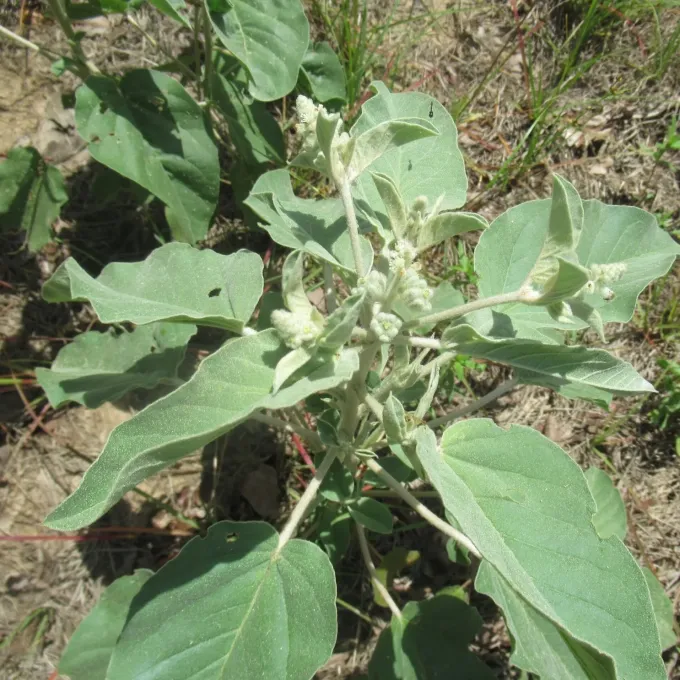
Botanically, the plant is characterized by its distinct pubescent foliage, which is covered in tiny star-shaped hairs (trichomes) that minimize transpiration. This structural feature is crucial for its survival in the high-heat, low-humidity conditions of its native range.
In terms of land use, Croton lindheimeri is recognized for its ecological contribution as a source of nectar for various pollinators. Its resilience makes it a suitable candidate for xeriscaping projects and native plant restoration efforts in regions experiencing frequent drought cycles.