
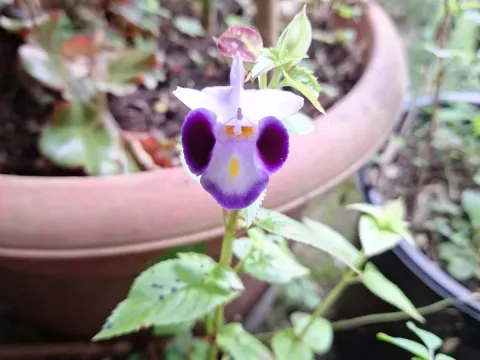
Torenia
Torenia L.
Sowing Torenia for seedlings is traditionally done in late February or throughout March. The seeds of the culture are very small, so they should be distributed on the surface of a nutrient substrate without deep covering, only lightly sprinkled with vermiculite or sand.
What the section contains


Torenia
For successful germination, the containers with seedlings must be covered with glass or film, ensuring a temperature in the range of +22...+24 degrees Celsius. The first shoots usually appear 10–14 days after sowing, provided that the soil moisture is kept constant.
Seedling picking is carried out at the stage of the formation of two or three true leaves. It is important to handle the delicate root system of young plants with care to avoid growth retardation during transplantation.
Transplanting seedlings into open ground is carried out only after the threat of night frosts has completely passed. Torenia belongs to heat-loving crops, so the optimal time for moving to a permanent location is early June.
When planting in flower beds or containers, it is recommended to keep an interval of about 20–25 centimeters between plants for the full development of the bush and proper crown ventilation.
Torenia is a member of the Linderniaceae family (formerly included in Scrophulariaceae). It is a herbaceous plant native to the tropical regions of Asia and Africa, which determines its high requirements for heat and air humidity.
For full development, the crop requires fertile, well-drained soil with a neutral or slightly acidic reaction. It is important to provide regular watering, as drying out of the soil ball negatively affects the decorativeness of flowers and leaves.
The plant prefers semi-shaded areas. Direct sunlight during midday hours can cause burns on delicate petals, while excessive shade leads to stretching of the shoots and a decrease in flowering intensity.
Crop management includes systematic fertilization with complex mineral fertilizers for flowering plants. Nutrient application is carried out every two weeks throughout the entire period of active vegetation.
To form a lush bush, it is recommended to pinch the tops of the shoots at the early stages of growth. This procedure stimulates branching and increases the total number of flower buds on the plant.
The main biological threat to Torenia in conditions of high humidity is fungal diseases, such as root rot and powdery mildew. To prevent them, it is necessary to avoid water stagnation in trays and ensure good air circulation.
Among the pests found on Torenia plantings, aphids and whiteflies are the most common. These insects feed on the plant's cell sap, which leads to leaf deformation and gradual wilting of the bush.
Spider mites can attack plants in hot and dry air conditions. Upon the first signs of the pest, treatment with modern acaricides is required, as well as increasing the humidity level around the bushes.
Slugs and snails can cause damage to young plants in open ground by eating the delicate leaf blades. Mechanical barriers or special molluscicides are used to control the number of mollusks.
In case of detecting infection centers, the affected parts of the plant should be removed immediately, and the remaining bushes should be treated with systemic fungicides to prevent further spread of pathogen spores.