
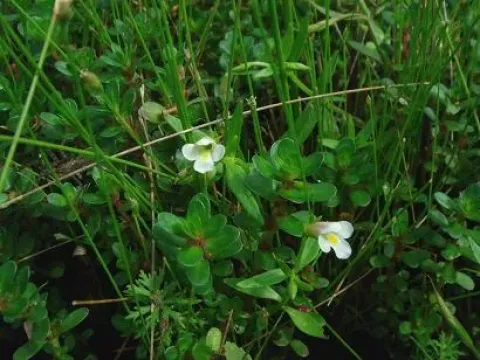
Lindernia micrantha
Lindernia micrantha
Lindernia micrantha is an annual herbaceous plant belonging to the Linderniaceae family. In the agricultural context, it is recognized primarily as an invasive weed species affecting flooded ecosystems.
What the section contains
Lindernia micrantha
The plant germinates rapidly once water levels rise in paddy fields. Its biological cycle is perfectly adapted to the semi-aquatic environment of modern rice production systems.
Seed germination is triggered by soil saturation and temperature spikes. In tropical regions, this weed can complete multiple life cycles within a single growing season.
Effective agronomic control requires pre-planting tillage to disturb the soil profile. This technique reduces the vertical distribution of seeds, effectively lowering the initial weed population.
The plant demonstrates high phenotypic plasticity, allowing it to survive and reproduce even in suboptimal agricultural conditions.
This species thrives in hydromorphic soils with high moisture content. It is most commonly found in wetlands, canal banks, and rice fields where water drainage is poor.
The thermal requirements for optimal growth range between 20°C and 30°C. High humidity and stable water levels are critical for its vegetative development.
Lindernia micrantha requires high levels of solar radiation to maintain its growth rate. Shading from dense crop canopies can significantly reduce its biomass production.
Soil nutrient availability, particularly phosphorus and nitrogen, directly influences the growth intensity. Well-fertilized paddy fields often face higher infestation rates.
Managing the water level within the field serves as a primary non-chemical tool. Fluctuating water depth can stress the weed and disrupt its standard growth cycle.
The main competitive threat posed by Lindernia micrantha is the uptake of essential nutrients intended for the crop. This competition leads to a significant decrease in final grain weight.
Chemical control is the most frequent management strategy. Using selective herbicides that target broad-leaved weeds ensures that the crop remains unaffected while suppressing the infestation.
Diseases affecting this plant are rare in agricultural settings, and no specific biological control agents are currently used at a commercial scale.
The rapid spread of seeds through irrigation water makes this weed a persistent challenge in large-scale farming. Strict sanitation of equipment and water channels is advised.
Rotating paddy crops with terrestrial ones is the most sustainable way to eliminate this weed. Dry soil conditions during the rotation period lead to the natural decline of the seed bank.