
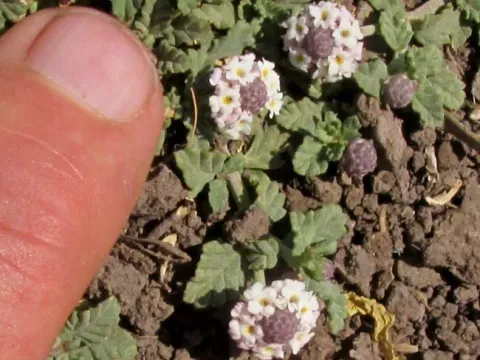
Lippia reptans
Lippia reptans
Lippia reptans is a perennial herbaceous plant belonging to the Verbenaceae family. It is widely recognized for its creeping growth habit, where stems spread horizontally and root at the nodes, creating a dense mat that effectively covers the ground surface.
What the section contains
Lippia reptans
The plant thrives in warm, sunny environments with adequate light exposure. While it is adaptable to various soil types, it performs best in well-drained, fertile soil. Proper moisture management is essential, as the plant responds well to irrigation but requires good drainage to avoid waterlogging.
Regarding climate requirements, Lippia reptans prefers temperate to tropical conditions. It is relatively drought-tolerant once established, although consistent moisture during the initial growth stages is critical for achieving a uniform and lush appearance.
In agricultural and landscaping contexts, it is highly valued as a sustainable groundcover that minimizes soil erosion and suppresses weeds. Its nectar-rich flowers make it an excellent choice for attracting pollinators, which supports local biodiversity and improves crop yields in adjacent fields.
Botanically, the plant is characterized by small, distinct leaves and cluster-like inflorescences. Its resilience to moderate foot traffic makes it a viable alternative to traditional turfgrass, reducing maintenance costs and water consumption in urban and rural green spaces.
The primary threats to Lippia reptans are fungal pathogens associated with excessive moisture and poor air circulation. Root rot and foliage blight can emerge if the soil remains waterlogged for extended periods, necessitating careful site selection and soil preparation.
Pests such as aphids and spider mites can infest the dense foliage of the plant. These insects thrive in warm, sheltered environments and can sap the plant's vitality, leading to yellowing or stunted growth if left unmanaged.
Effective pest management involves early detection and the use of integrated pest management strategies. This includes biological controls or targeted applications of insecticidal soaps to minimize the impact on beneficial insects and the surrounding environment.
Weed competition is generally low once the Lippia mat is fully established, but it can be a challenge during the planting phase. Keeping the area free of aggressive invasive weeds in the early stages is crucial to allowing the Lippia to dominate the area.
Sanitation practices, such as removing debris and thinning out overly dense patches, are recommended to maintain plant health. These measures help improve airflow, reduce humidity around the base of the plant, and significantly lower the risk of disease outbreaks.