
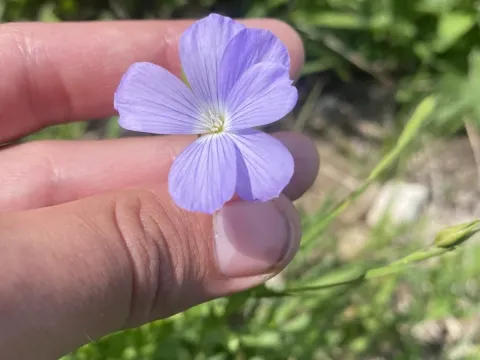
Linum nervosum
Linum nervosum
Linum nervosum belongs to the Linaceae family. This perennial herbaceous plant naturally grows in temperate climate regions, primarily in the Caucasus and surrounding areas. The crop prefers well-drained, fertile soils that are rich in organic matter.
What the section contains
Linum nervosum
The plant possesses specific botanical traits: a developed stem with prominent leaf venation, which is reflected in its specific name. It has a taproot system that penetrates deeply into the soil, providing the plant with resilience against temporary drought periods.
For successful development, Linum nervosum requires sufficient sunlight and moderate moisture levels. Unlike some commercial flax cultivars, this species is more sensitive to soil aeration and does not tolerate waterlogging, which can lead to root rot.
The optimal temperature range for the development of this crop is between 15 and 22 degrees Celsius. An important factor is the absence of sudden temperature fluctuations during the active growth phase, as the plant is sensitive to late spring frosts.
The economic use of this species is often associated with its ornamental qualities and its potential as industrial raw material. Although it is not a large-scale commodity crop, it is often studied in breeding programs to improve the adaptive traits of other flax species.
The main threats to Linum nervosum include fungal diseases such as Fusarium wilt and anthracnose, which affect the stems and root system when agricultural practices are neglected. Excessive moisture in the root zone significantly increases the risk of these pathogens.
Among pests, the flax flea beetle poses the greatest danger, as it damages young seedlings during the early vegetation phase. Timely treatment of the fields helps to minimize damage caused by these insect phytophages.
Weeds create serious competition for this crop during the initial growth stages. Linum nervosum has moderate growth vigor in the first few weeks, so it requires careful weed management to ensure proper light penetration.
Pests such as cutworms and various species of weevils can damage the reproductive organs of the plant, which negatively affects seed yields. Systematic monitoring of the crop condition allows for the early detection of infestation hotspots.
Disease prevention involves strict adherence to crop rotation and the use of treated seeds. The application of fungicides is acceptable only during periods of high pathogen activity, in accordance with agricultural protection standards.