
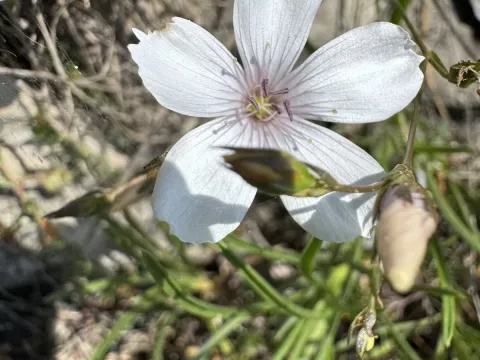
Narrow-leaved flax
Linum tenuifolium
Narrow-leaved flax (Linum tenuifolium) is a perennial herbaceous plant belonging to the Linaceae family. This species is native to Central and Southern Europe, where it thrives in rocky, calcareous, and nutrient-poor soils, demonstrating remarkable adaptation to dry environments.
What the section contains
Narrow-leaved flax
The plant is categorized as a xerophyte, characterized by a deep and efficient root system that allows it to survive long periods of drought. Its ability to extract moisture from deep soil layers makes it an interesting candidate for arid agriculture and slope stabilization projects.
Cultivation requires locations with full sun exposure and excellent soil drainage. Waterlogged soil conditions are detrimental to the plant, often leading to root decay. It exhibits high winter hardiness, allowing it to survive frost without significant damage to its vegetative structures.
Botanically, it features narrow, needle-like leaves and delicate light blue or white flowers that bloom in early summer. The plant grows in dense clumps, which provides good ground cover and helps prevent soil erosion in exposed, hilly terrains where other crops fail to establish.
Beyond its ecological value, narrow-leaved flax is increasingly recognized for its aesthetic appeal in dry garden landscaping and its genetic potential for breeders aiming to develop drought-tolerant flax varieties for more challenging climates.
The primary threats to narrow-leaved flax involve fungal pathogens, particularly Fusarium species, which cause wilting. These diseases are most prevalent in environments with high humidity or poor soil drainage, making drainage management essential for crop success.
Insect pests such as the flax flea beetle are particularly destructive to seedlings in the early spring. These insects feed on young leaves, significantly reducing the vigor of the plant and potentially causing high mortality in young stands.
Rust diseases pose a constant threat if crop hygiene is neglected. Maintaining spatial isolation from commercial technical flax fields is a critical preventive strategy to reduce the risk of cross-contamination by fungal spores.
Weed competition is a significant concern during the establishment phase. Weeds not only compete for nutrients but also alter the microclimate by trapping humidity, which indirectly promotes the spread of pathogens throughout the planting area.
Integrated pest management, including regular crop monitoring and the use of targeted biological controls, is highly recommended to maintain plant health while minimizing chemical residues, especially in areas dedicated to biodiversity conservation.