
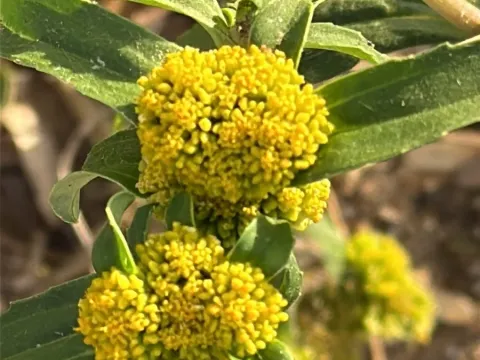
Flaveria trinervata
Flaveria trinervata
Flaveria trinervata is an annual herbaceous plant belonging to the Asteraceae family. Known for its significant scientific value, it serves as a model organism for studying C4 photosynthesis, a pathway that allows the plant to thrive in harsh environments.
What the section contains
Flaveria trinervata
The plant originates from the tropical and subtropical regions of the Americas. Its natural range includes disturbed sites, roadsides, and abandoned agricultural land, where it easily competes with other flora due to its rapid biomass accumulation.
Botanically, Flaveria trinervata is distinguished by its branched stems and leaves marked with three prominent longitudinal veins. The inflorescences consist of small yellow flower heads, typical of the genus, which are highly attractive to local pollinators.
Soil requirements for optimal growth include well-drained, fertile substrates with a neutral pH. While it is adaptable to various soil textures, it shows a clear preference for loamy and sandy soils that provide adequate aeration to the root system.
Climate adaptation is a key feature of this species. Its C4 metabolic pathway enables the plant to fix carbon dioxide efficiently under high-temperature conditions and intense light, making it a highly productive species in warm climates.
The plant is susceptible to powdery mildew during periods of high humidity and poor ventilation. Cultural control practices, such as maintaining proper plant spacing, are essential to reduce the incidence of fungal diseases.
Common pests include aphids and mites that infest the foliage. These pests can significantly reduce plant vigor; therefore, implementing early detection and biological control measures is recommended for integrated management.
Root rot represents a major threat when the plant is grown in waterlogged conditions. Ensuring a well-structured soil with good drainage is the primary defense strategy against soil-borne pathogens and root-related issues.
As an aggressive colonizer, Flaveria trinervata can become a problematic weed in crop fields. Effective management involves preventing seed set through timely cultivation and mechanical removal before the flowering stage.
Chemical control utilizing selective herbicides can be employed in heavy infestations. It is critical to select agents that target Asteraceae species without adversely affecting the primary crops grown in the same field.