
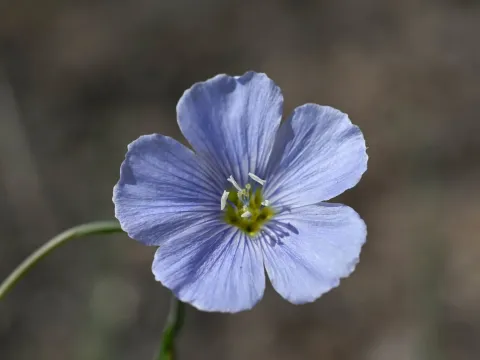
Lewis flax
Linum lewisii
Lewis flax (Linum lewisii) is typically sown in late autumn to allow for natural stratification, which is crucial for achieving high germination rates in the spring.
What the section contains
Lewis flax
When spring sowing is preferred, seeds should be cold-stratified in a refrigerator for at least one month before being planted in the field to mimic natural winter conditions.
Seeds should be sown shallowly, as they require light to germinate. A light dusting of soil or sand is sufficient to keep them in place while allowing sunlight to reach the seed coat.
Proper spacing is essential for this species. Aim for a density that allows for 10–12 plants per square meter to ensure adequate air circulation and prevent moisture buildup.
Young seedlings grow slowly initially. Weed control during the early developmental stages is critical to ensure the crop establishes itself without competition for nutrients.
Lewis flax is a hardy perennial belonging to the Linaceae family. It is native to North America and has evolved to thrive in cool, well-drained environments.
The plant requires full sun exposure to reach its full potential. While it can tolerate partial shade, flowering intensity and stem strength will significantly decrease.
Soil quality should lean toward sandy or rocky textures with excellent drainage. This plant cannot tolerate "wet feet" and will quickly perish in waterlogged conditions.
It is remarkably drought-tolerant once established. Its deep root system allows it to access subsoil moisture, making it resilient in regions with limited rainfall.
Minimal fertilization is required. Excessive nutrients tend to produce excessive foliage, which can weaken the stems and make the crop prone to lodging during storms.
Root rot caused by stagnant water is the primary disease threat. It is essential to choose fields with natural slopes to facilitate rapid water runoff after rainfall.
Flea beetles are the most significant insect pest for Lewis flax. They target young, tender leaves and can cause severe damage before the plant becomes established.
Aphids can occasionally cluster on the flower buds during mid-summer. While usually not fatal, heavy infestations can reduce seed production and impact plant vigor.
Crop rotation is the best management strategy. Avoiding flax for at least three seasons on the same plot helps break the life cycles of soil-borne pathogens.
Integrated pest management techniques, including the use of trap crops or attracting natural predators, are highly effective for maintaining a healthy flax field.