
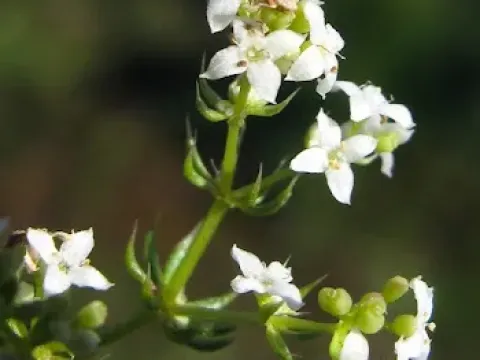
Fleurot's bedstraw
Galium fleurotii
Fleurot's bedstraw (Galium fleurotii) belongs to the Rubiaceae family and is a perennial herbaceous plant. In its natural environment, the seeds undergo a natural stratification process during the winter, which is essential for uniform germination in the spring.
What the section contains
Fleurot's bedstraw
For commercial cultivation, sowing is usually conducted in late autumn (October or November). If spring sowing is necessary, seeds must be stratified at temperatures between +2 and +4 degrees Celsius for at least 8 weeks to break dormancy.
The optimal seeding depth is shallow, ranging from 0.5 to 1 cm. Because the seeds are tiny, the seedbed must be finely prepared and firm enough to allow for good soil-to-seed contact without burying the seeds too deeply.
Row spacing should be maintained at 25–30 cm. This spacing is critical to allow for proper air circulation and to facilitate mechanical weeding, which is vital during the plant's establishment phase.
Seedlings typically emerge when soil temperatures reach +10...+12 degrees Celsius. During the first few months, the plants develop a basal rosette, and it is crucial to protect them from aggressive weeds that could easily outcompete the young crop.
This plant thrives in well-drained, fertile, neutral to slightly alkaline soils. It is particularly sensitive to waterlogged conditions, so choosing a site with excellent natural drainage is key to preventing root rot.
Fleurot's bedstraw requires a full-sun location for optimal growth and secondary metabolite synthesis. While it can survive in partial shade, excessive shading results in weak, spindly stems and lower concentrations of active botanical compounds.
The species exhibits high winter hardiness, allowing it to withstand harsh climatic conditions typical of the temperate zone. No special winter protection is required once the plants have established a healthy root system.
Organic fertilization, such as well-rotted compost, is preferred over synthetic fertilizers. Excessive nitrogen promotes vegetative growth at the expense of plant stability and the quality of the raw herbal material.
Water management is critical: consistent, moderate soil moisture is required during the vegetative phase, but excessive dampness must be avoided at all costs to maintain root health and prevent pathogen proliferation.
Yield capacity typically peaks in the second and third years of production. Under optimal agronomic management, producers can expect to harvest between 1.5 and 3 tons of dried raw material per hectare.
Harvesting is performed at the early flowering stage, as this is when the concentration of essential botanical constituents is at its highest. Mechanical harvesters are commonly used on larger plantations to ensure efficiency.
Immediate post-harvest processing is mandatory. The biomass should be dried in a ventilated area or a specialized drying chamber at temperatures not exceeding +40 degrees Celsius to preserve volatile compounds and color.
Seed harvesting requires careful timing, as the mature seeds are prone to shedding. Harvesting when the inflorescences show initial signs of turning brown is the optimal strategy for maximizing seed recovery.
Proper storage is essential for maintaining product shelf life. The dried product should be kept in airtight containers in a cool, dark place, where it can remain viable for up to two years.
Powdery mildew is the most common disease, often appearing in late summer during periods of high humidity and fluctuating temperatures. Maintaining proper spacing and air circulation within the canopy is the primary preventive measure.
Root rot is a significant threat associated with poor drainage and overwatering. If symptoms appear, irrigation must be halted immediately, and the soil should be loosened to promote better oxygenation.
Pests like aphids and leaf beetles can cause damage during the active growing season. Integrated pest management strategies, including the use of biological controls or botanically-derived sprays, are recommended to minimize chemical usage.
Weed control remains the most labor-intensive aspect of cultivation. The presence of aggressive perennials can severely impact yield; therefore, early-season mechanical cultivation and mulching are highly beneficial.
In cases of severe infection, targeted fungicide applications may be necessary, provided they are approved for use on botanical or herbal crops and the pre-harvest interval is strictly observed.
Harvesting is conducted using sickle-bar mowers or specialized forage harvesters, with a cutting height of 5–10 cm from the soil surface to ensure rapid regeneration and long-term plantation health.
The collected biomass must be transported to drying facilities without delay. If the material is allowed to sit in piles, internal heating and fermentation can occur, significantly lowering the quality of the final product.
Sorting the material is an essential step to remove weeds, soil, and debris. The final commercial product must be uniform, with a bright green appearance and no signs of mold or contamination.
Baling or loose packaging is used for storage and transport. Ensuring that the final moisture content is between 12% and 14% is crucial to prevent the development of spoilage microorganisms during storage.
After the final harvest cycle, plant residues can be incorporated into the soil or composted, effectively recycling nutrients back into the ecosystem of the farm.